Commemoration Operation Cannonshot 2019
The Netherlands was invaded and occupied by Nazi Germany at the beginning of May 1940. While the southern part of the Netherlands was liberated by the Western Allies during Operation Market Garden in September 1944, the north remained occupied until May 1945. In early 1945, the liberation of the northern part of the Netherlands was started under the code name Operation Cannonshot. This military operation was conducted in conjunction with Operation Quick Anger. Operation Cannonshot started on 11 April 1945, when Canadian forces crossed the River IJssel from the east near the small village of Gorssel. Between the villages of Voorst and Wilp, the troops crossed the river using amphibious vehicles. Heavy fighting took place in the Wilpse Klei, a floodplain along the IJssel, as well as in and around the village of Wilp. During the liberation of the Wilpse Klei and the village itself, 37 Canadian soldiers tragically lost their lives.
Operation Cannonshot is commemorated each year at the IJssel Crossing Memorial and at the memorial plaque mounted on the wall of the Church of Wilp. The IJssel Crossing Memorial marks the spot where the Western Allied forces crossed the River IJssel. About fifteen Second World War military vehicles and their owners took part in the memorial tour and memorial ceremonies of Operation Cannonshot. In our Ford Jeep, alongside the other army vehicles, we drove through the bocage landscape in the Achterhoek – a rural region east of the river IJssel – where, in April 1945, the soldiers of the 48th Highlanders of Canada pushed forward to liberate the northern Netherlands.
The Highland Regiment Pipes and Drums performed at both of the ceremonies. Both the memorial tour and ceremonies were organised by the Groene Soos and the Wilp Interest Group. The Operation Cannonshot 2019 memorial tour concluded at the Ford Museum Tullekensmolen at Beekbergen, a village set in the beautiful landscape of the Veluwe.
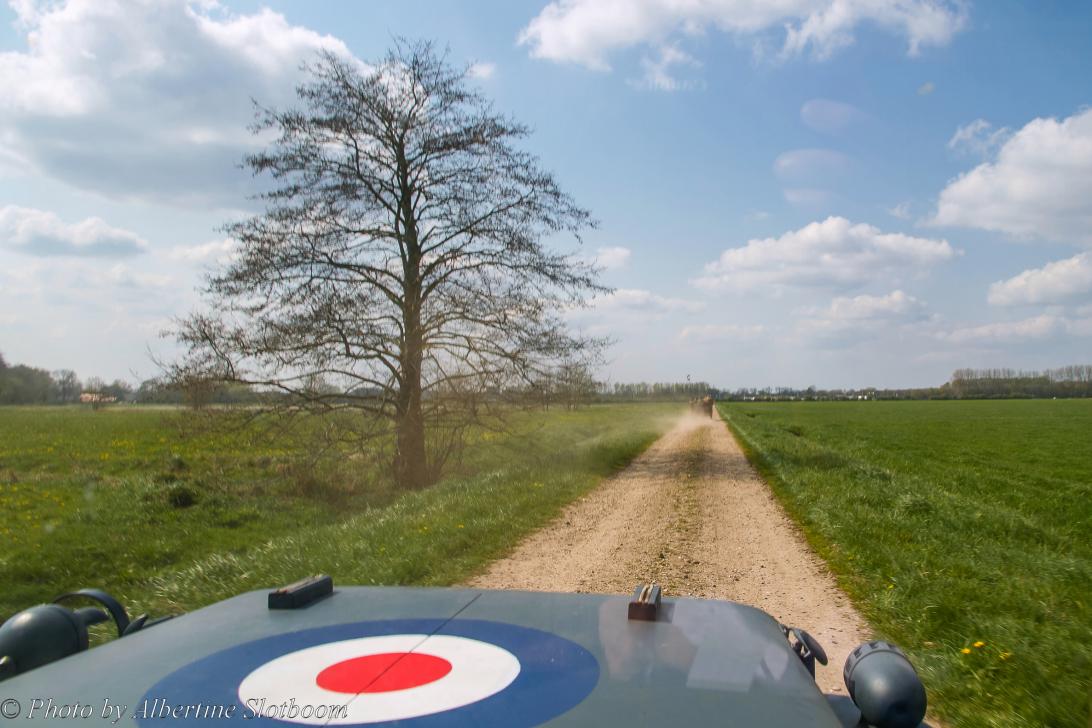
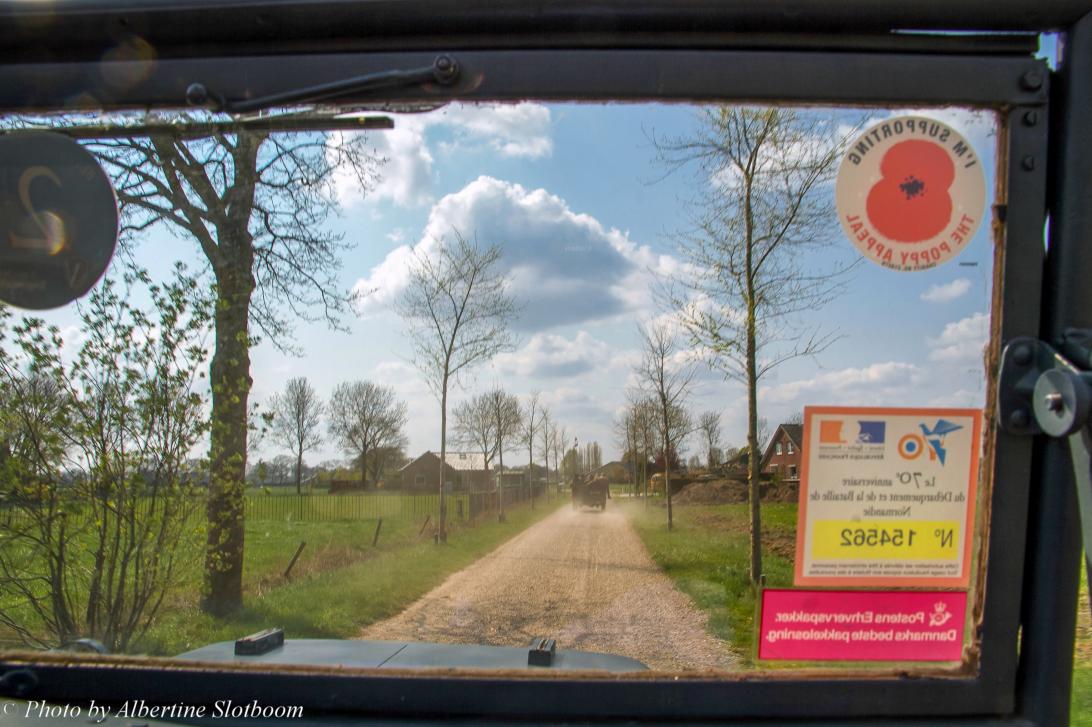
Commemoration Operation Cannonshot and Memorial Tour 2019: In our authentic Second World War Ford Jeep, we drove along the dusty sand roads of the Achterhoek region during the Operation Cannonshot memorial tour. Operation Cannonshot was an Allied military operation at the end of the Second World War. This military operation was launched on 11 April 1945. The aim of the Allies was to liberate Deventer first, followed by Apeldoorn and the Veluwe, the rich forested area between these cities and Arnhem. This operation was carried out in cooperation with Operation Quick Anger
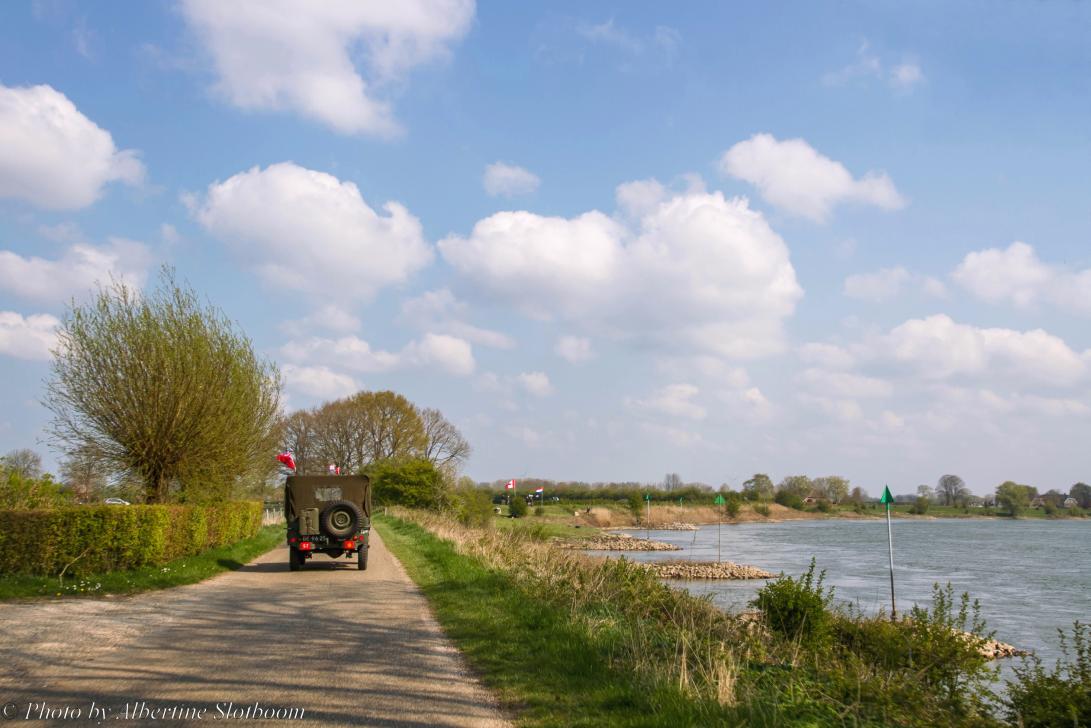
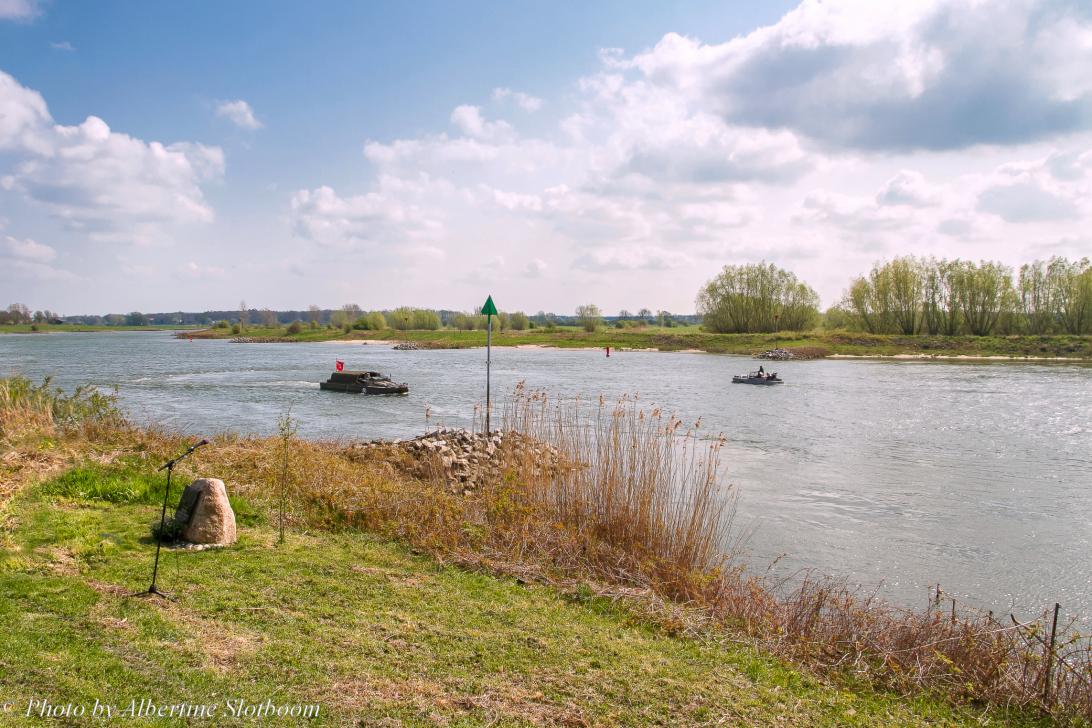
Commemoration Operation Cannonshot and Memorial Tour 2019: In our authentic Second World War Ford Jeep, we drove along the dusty sand roads of the Achterhoek region during the Operation Cannonshot memorial tour. Operation Cannonshot was an Allied military operation at the end of the Second World War. This military operation was launched on 11 April 1945. The aim of the Allies was to liberate Deventer first, followed by Apeldoorn and the Veluwe, the rich forested area between these cities and Arnhem. This operation was carried out in cooperation with Operation Quick Anger
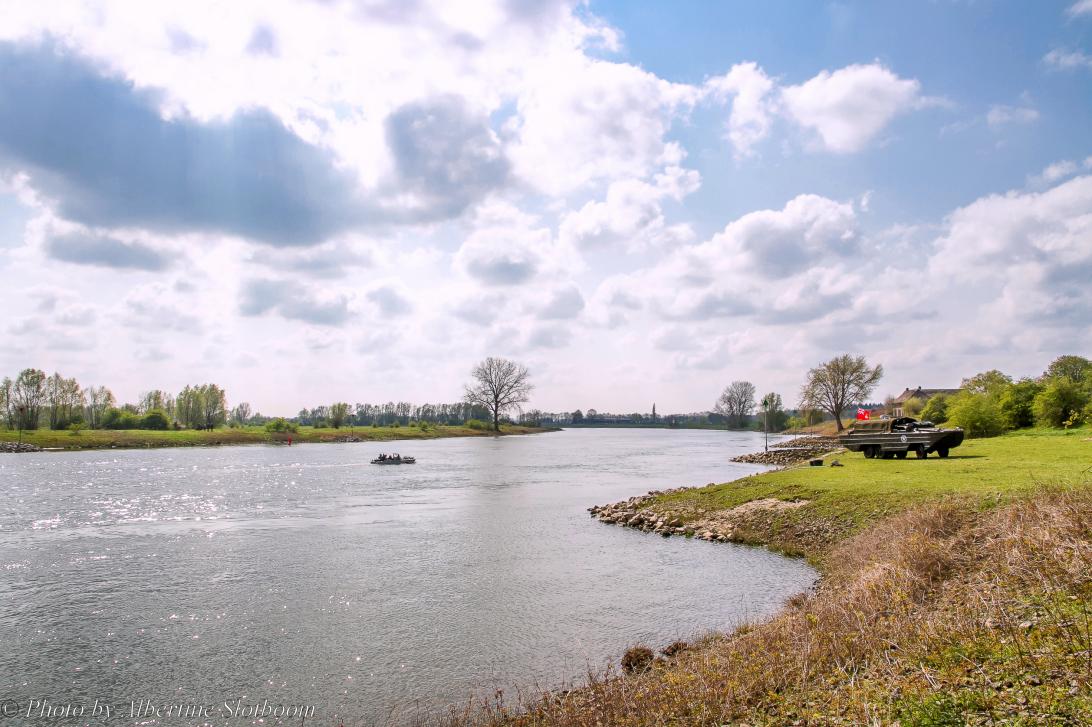
Commemoration Operation Cannonshot 2019: A Second World War Jeep driving along the river IJssel during the Operation Cannonshot Memorial Tour 2019. In the far distance lies the IJssel Crossing Memorial on the bank of the river. Operation Cannonshot is remembered each year at the IJssel Crossing Memorial between Voorst and Wilp.

Commemoration Operation Cannonshot 2019: A DUKW and a Ford GPA Jeep on the river IJssel, passing the IJssel Crossing Memorial. The memorial is situated in the floodplain of the IJssel, on the bank of the river between the villages of Voorst and Wilp. The monument consists of a large boulder with an engraved plaque. The amphibious vehicles were present to add to the commemorative event.

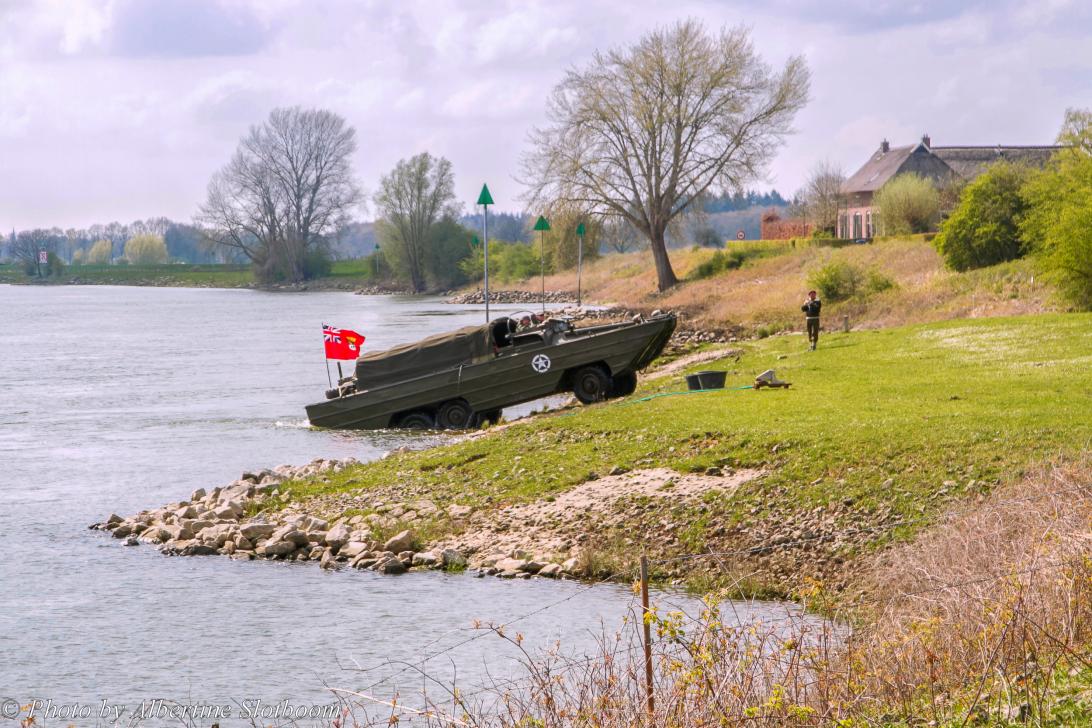
Commemoration Operation Cannonshot 2019: A DUKW on the bank of the IJssel at the IJssel Crossing Memorial. A DUKW, pronounced as duck, is a 2.5 ton six-wheel-drive amphibious vehicle used in WWII. The US produced over 20,000 DUKWs during WWII. The vehicle was first used during the invasion of Sicily in 1943 and also during the Invasion in Normandy in 1944.

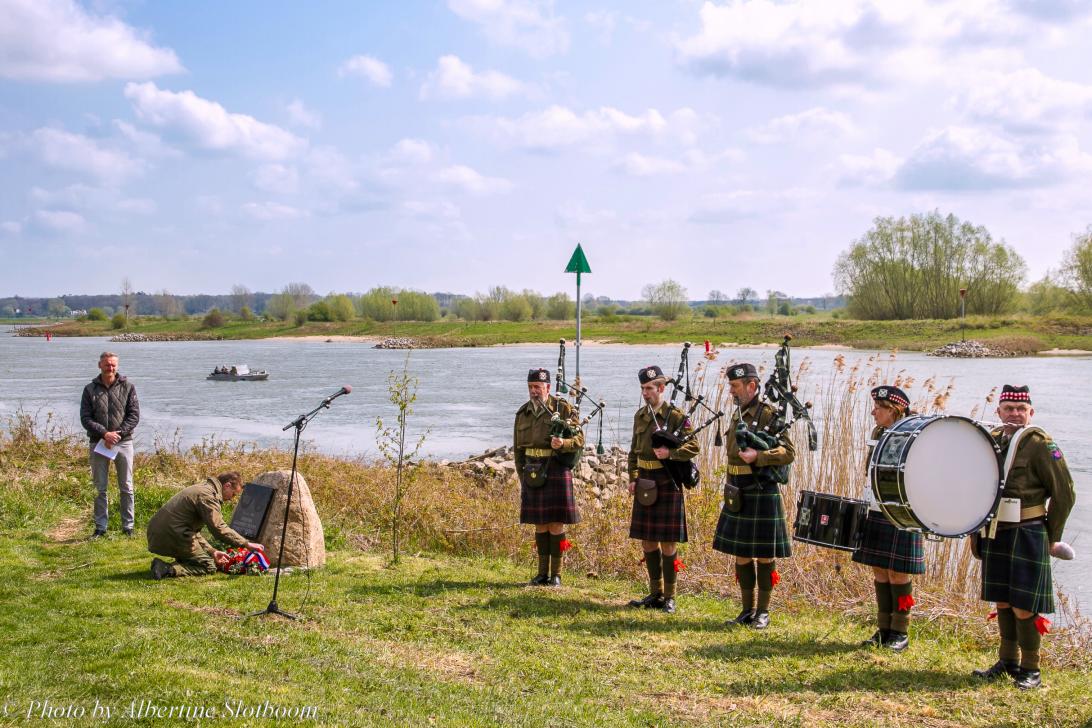
Commemoration Operation Cannonshot 2019: A member of the Groene Soos laid a wreath at the IJssel Crossing Memorial on the bank of the river. This monument honours the soldiers who fought here during the assault. The Highland Regiment Pipes and Drums performed at the ceremony, while a Ford GPA amphibious Jeep was sailing on the river in the background to add to the commemoration.

Commemoration Operation Cannonshot 2019: A DUKW on the bank of the IJssel at the IJssel Crossing Memorial, a Ford GPA Jeep floating on the river IJssel. The Ford GPA Jeep, also known as Seep, is the amphibious version of the Ford GPW Jeep. During WWII, 12,778 Seeps were constructed. Seeps were used in the Pacific and during the invasions of Sicily and Normandy. However, Buffaloes were used during the crossing of the IJssel in April 1945.

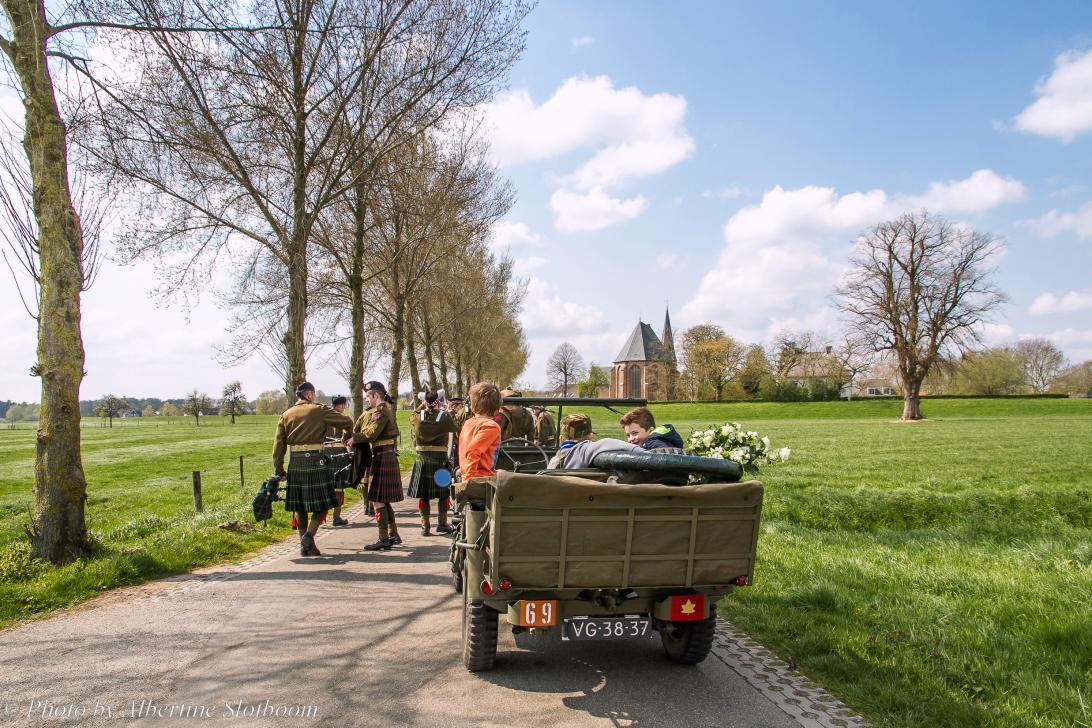
Commemoration Operation Cannonshot 2019: A Second World War Willys MB Jeep transported a floral wreath to the commemoration of this historic military operation at the Village Church of Wilp. During Operation Cannonshot in the spring of 1945, approximately 600 Canadian soldiers crossed the River IJssel from the east, between Deventer and Wilp. This marked the beginning of the liberation of the western and northern part of the Netherlands.

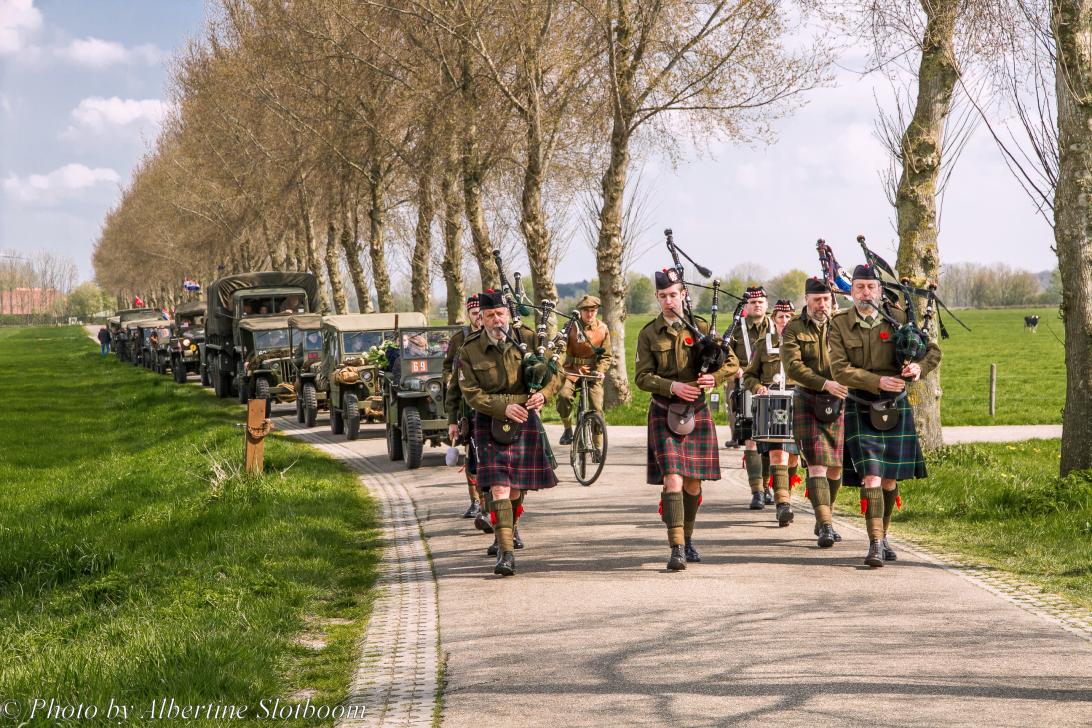
Commemoration Operation Cannonshot 2019: The members of the Highland Regiment Pipes and Drums march towards the village of Wilp, followed by a convoy of authentic Second World War army vehicles. Each member of the pipe and drum band wears a different regimental tartan of Scotland. With this beautiful gesture, they pay tribute to all the Scottish regiments.

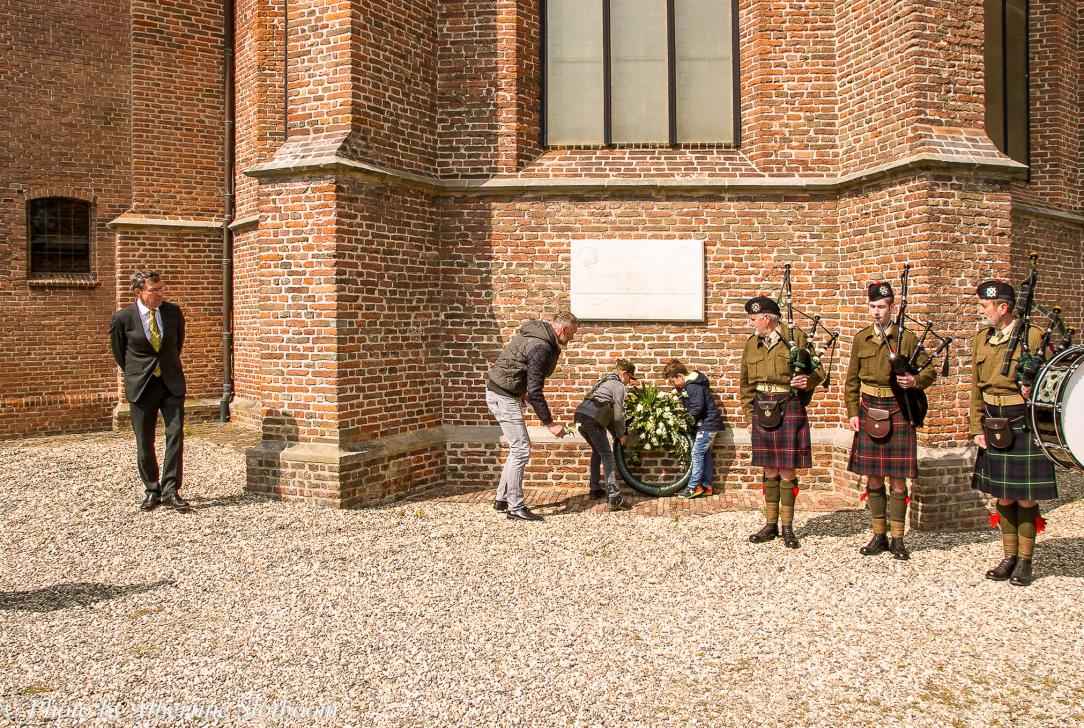
Commemoration Operation Cannonshot 2019: Children from a local school lay a wreath at the Operation Cannonshot monument in Wilp. The monument consists of an engraved plaque mounted on the wall of the Village Church, commemorating the soldiers of the 48th Highlanders of Canada who died during the operation. These young men were initially buried temporarily in Wilp and later transferred to the Holten Canadian War Cemetery.

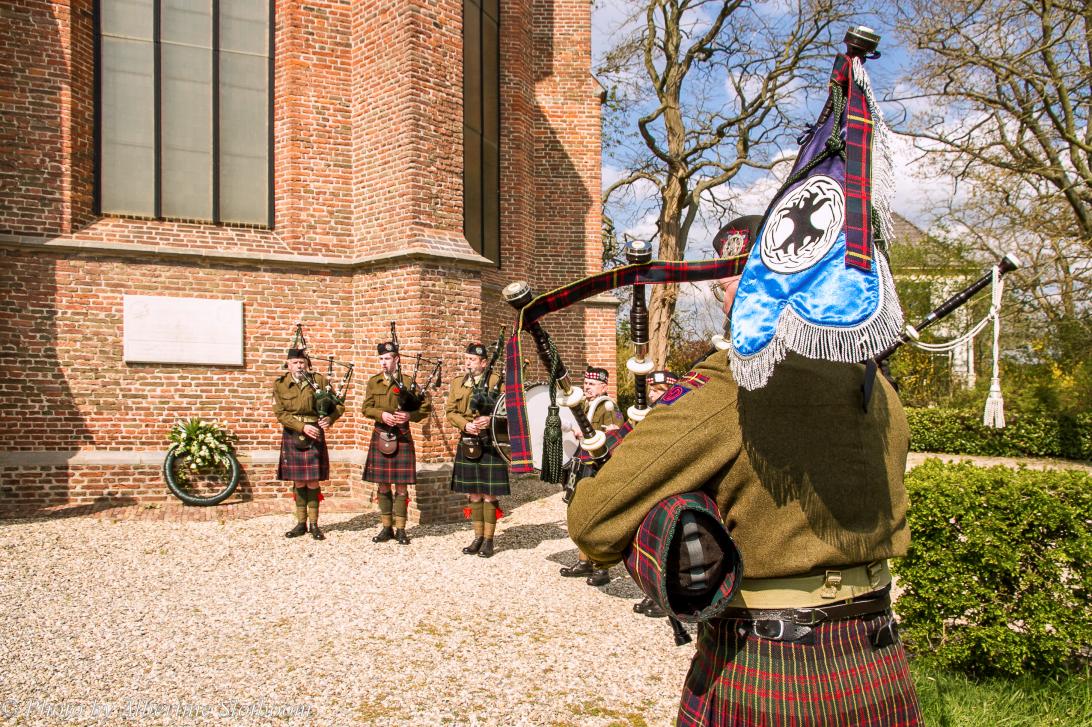
Commemoration Operation Cannonshot 2019: The Dutch pipe and drum band the Highland Regiment Pipes and Drums performed at the commemoration ceremony at the Church of Wilp. The village of Wilp was liberated on 12 April 1945 during Operation Cannonshot, an assault in which 19 Canadian soldiers lost their lives. Several nearby farmhouses were also destroyed, resulting in the deaths of nine residents.

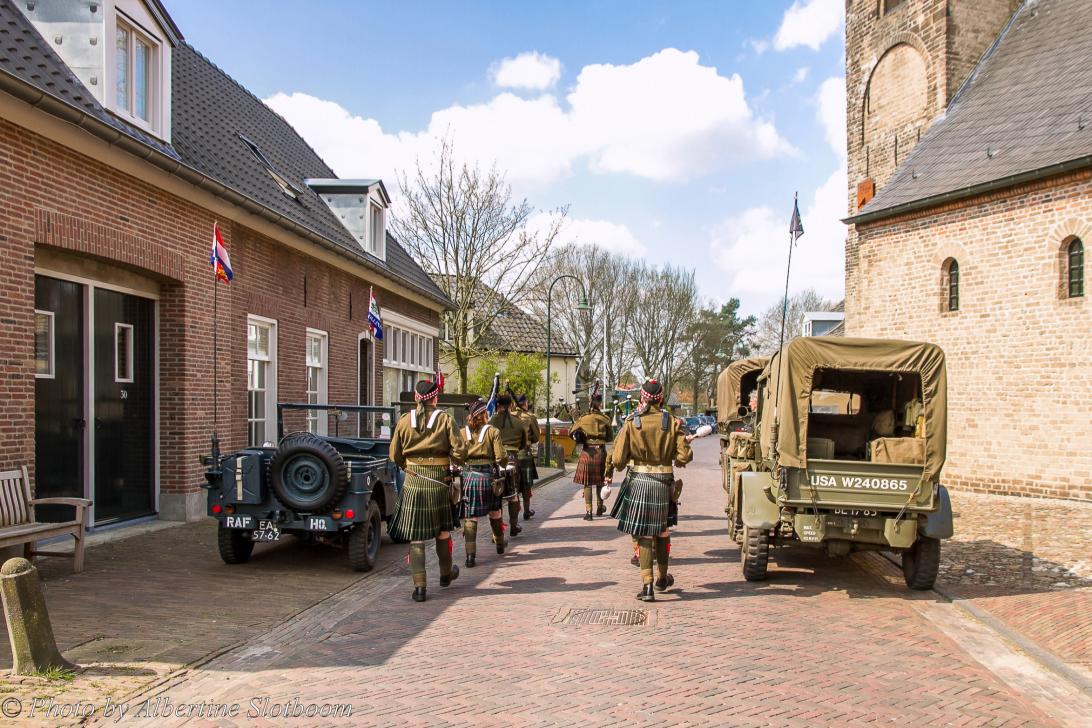
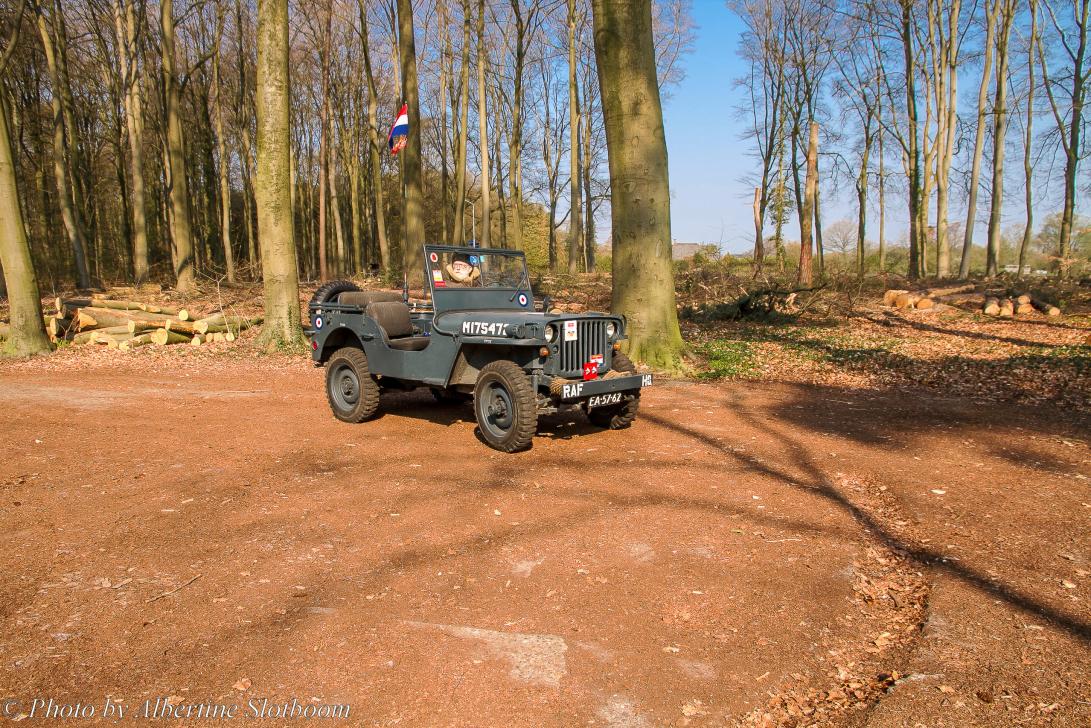
Commemoration Operation Cannonshot 2019: The Highland Regiment Pipes and Drums marching along the Kerkstraat (Church Road) in the village of Wilp. Several Second World War military vehicles are parked on both sides of the street, including our own Royal Air Force blue Ford GPW Jeep. The Highland Regiment Pipes and Drums are a renowned Dutch pipe and drum band that regularly performs at commemorations.

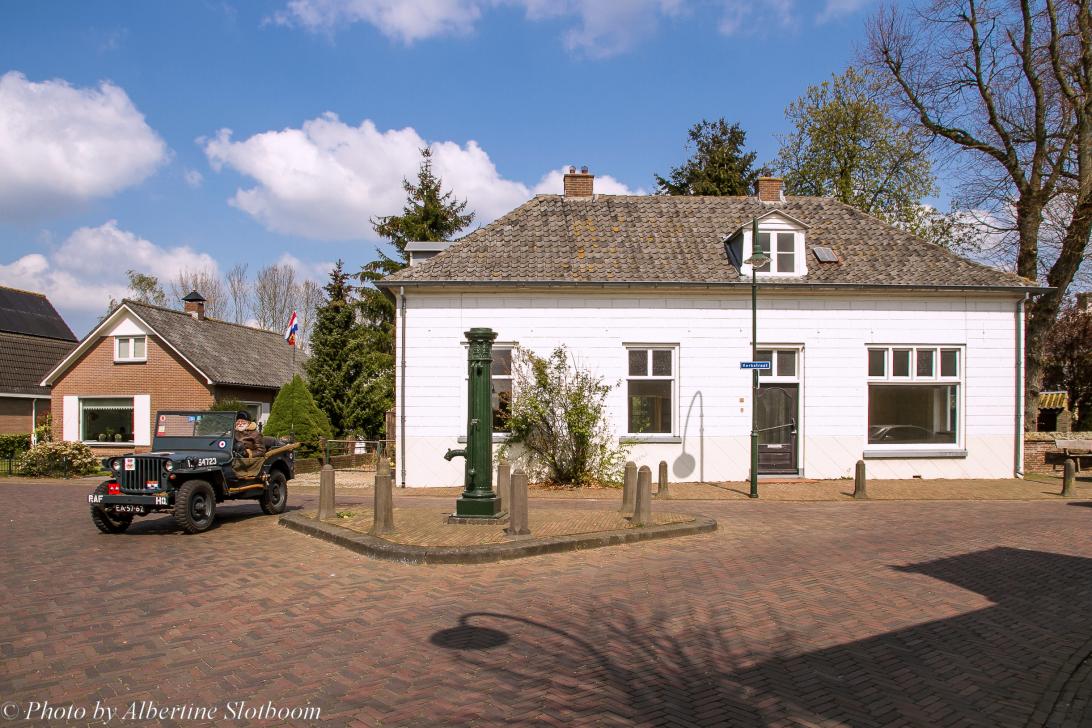
Commemoration Operation Cannonshot 2019: A Ford GPW Jeep in the village of Wilp, one of the oldest villages in the Netherlands. A historic cast-iron water pump stands on the Kerkplein, right next to the church. In the past, it served not only as a source of water but also as a meeting place for local residents. The Wilpse Klei lies between this charming village and the IJssel. During Operation Cannonshot, this area was in the line of German fire, where the fiercest fighting took place, and as a result, the Canadians suffered their heaviest losses.

Commemoration Operation Cannonshot and Memorial Tour 2019: Driving our own Jeep on the same dusty sand roads of the Achterhoek, a region in the east part of the Netherlands, where the 48th Highlanders of Canada pushed forward during Operation Cannonshot in 1945. They advanced to liberate Apeldoorn, Deventer and the high ground of the Veluwe between these cities and Arnhem. Wilp was liberated on 12 April; followed by the liberation of Arnhem on 14 April and, the whole of the Netherlands was liberated within a month.

Commemoration Operation Cannonshot 2019: During the memorial tour marking this military operation, we passed the remnants of a German launch site for V-1 rockets (flying bombs), deeply hidden in the woods near Joppe and Eefde. The enormous protractor to aim the rockets in the right direction is just visible in the concrete floor. A section of narrow-gauge railway, used to transport the huge rockets, can also still be found there. The 'V' stands for the German word 'Vergeltungswaffe' (reprisal weapon).

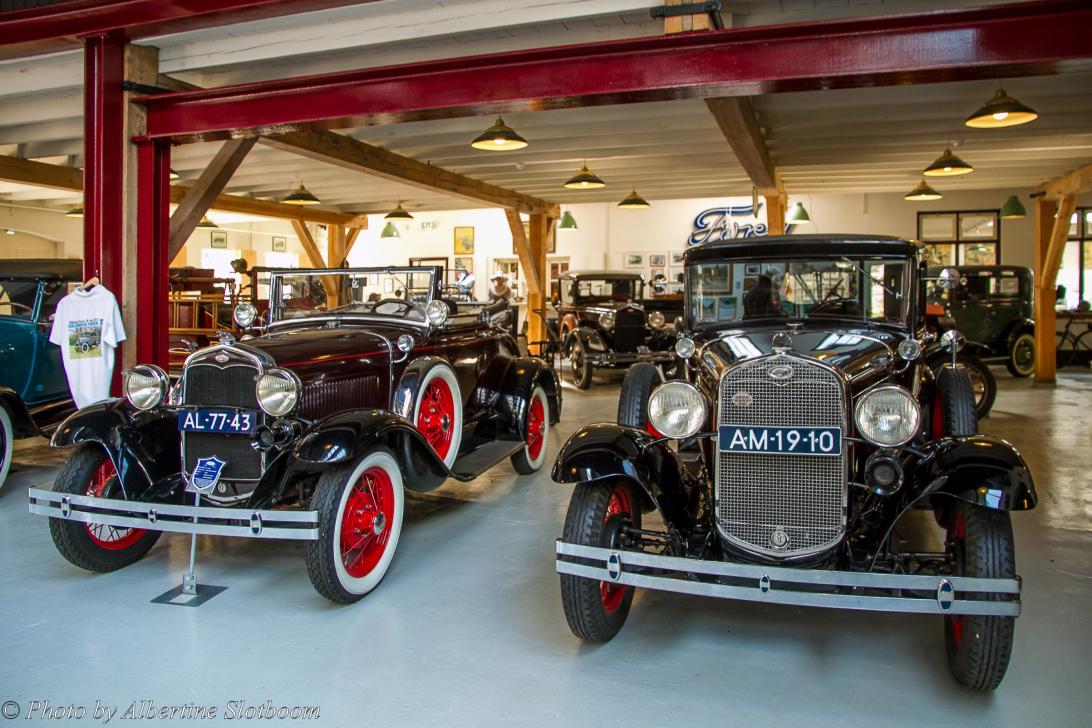
Commemoration Operation Cannonshot and Memorial Tour 2019: The memorial tour of this important military operation ended at the Ford Museum Tullekensmolen. This small-scale museum holds a collection of Ford classics from the period 1907–1935. In addition, it houses a distinctive collection of miniature cars, toy cars and other children's toys dating from the mid-20th century. The museum is housed in a historic water mill in Beekbergen, a rural village near the Hoge Veluwe National Park and the Kröller-Müller Museum.