Operation Quick Anger Commemoration 2018
Following the Battle of Arnhem in September 1944, when the British and U.S. forces failed to cross the Rhine, the north of the Netherlands remained under Nazi German occupation. In the spring of 1945, the Allies launched a series of military operations to liberate the rest of the country, including Operation Quick Anger and Operation Cannonshot, which were conducted in conjunction with each other. Operation Quick Anger was a military operation to seize Arnhem. To liberate this city, an enormous Allied military force was gathered at Westervoort on the east bank of the River IJssel. After the lost Battle of Arnhem in 1944, the residents of this small village had already been evacuated.
Operation Quick Anger began on 12 April 1945, when the Allies crossed the IJssel from the east. The first troops crossed the river in amphibious vehicles; within 11 hours the Allied forces had constructed a temporary bridge and thousands of military vehicles crossed the river. Arnhem was liberated on 14 April 1945 and the rest of the Netherlands within a month. On 5 May 1945, the Nazi occupation of the Netherlands had finally come to an end. The First Canadian Army played a crucial role in the liberation of the northern Netherlands. During the fighting for Arnhem in April 1945, British units recorded 62 soldiers killed and 134 wounded, although it remains unclear if these figures include Canadian casualties.
In April 2018, we took part in the commemoration of Operation Quick Anger. Second World War vehicles and their owners gathered at Huize Vredenburg in Westervoort for a memorial tour. In our own WWII Ford Jeep, alongside the other vehicles, we drove through the Liemers, a rural region east of the River IJssel. The tour ended at the Crossing to Liberation Monument on the east bank of the IJssel at Westervoort, where we attended the memorial and wreath-laying ceremony. Since 2011, the memorial ceremony has been held at the monument every year to commemorate Operation Quick Anger.
Every year, the Liberation Flame is also lit at the Crossing to Liberation Monument. Every year at midnight between 4 and 5 May, the Liberation Flame is lit in Wageningen, the city where the capitulation documents for all German forces in the Netherlands were signed in May 1945. This famous flame is a national symbol and is used to light torches which are taken by a team of relay runners from Wageningen, the City of Liberation, to more than 200 towns and villages in the Netherlands; Westervoort is one of them.
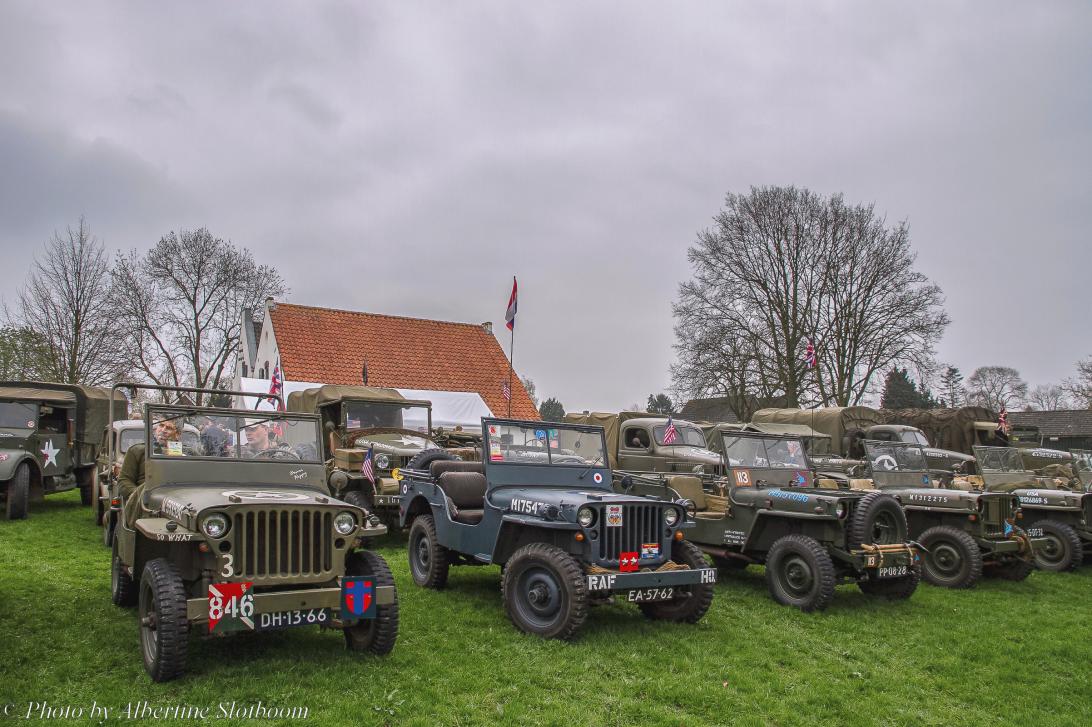
Operation Quick Anger Commemoration and Memorial Tour: In April 2018, we took part in the memorial tour and attended the memorial ceremony for this daring military operation. Several authentic WWII vehicles and their owners gathered at the converted 14th-century farmhouse Huize Vredenburg in the Dutch village of Westervoort, which served as the starting point of the memorial tour.
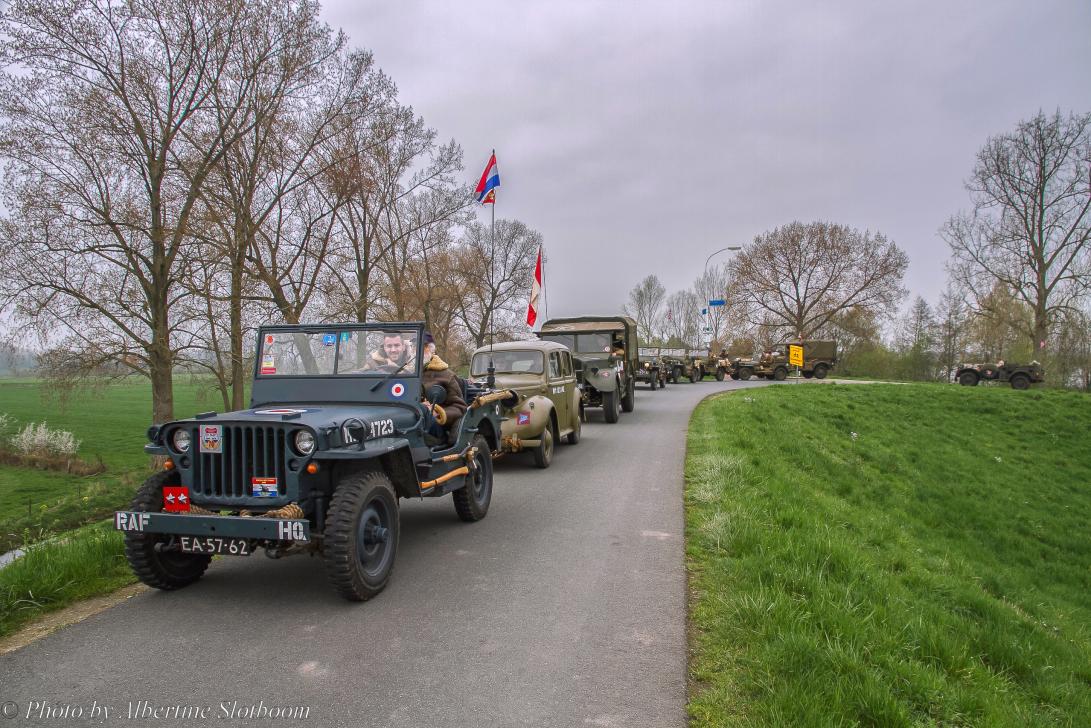
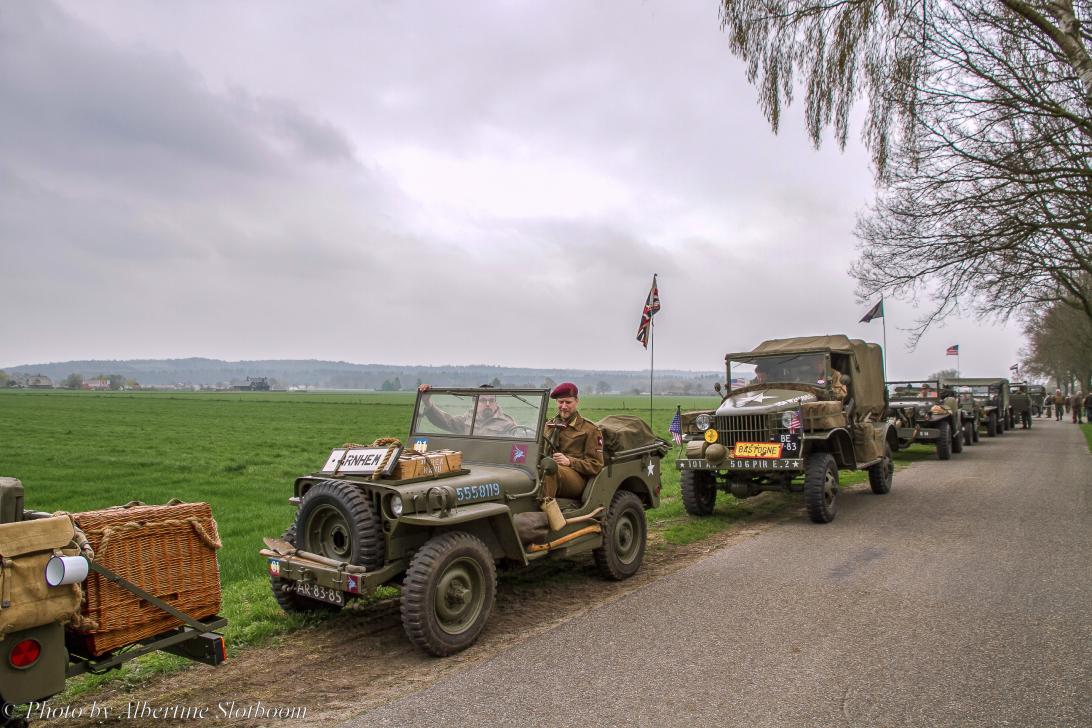
Operation Quick Anger Commemoration and Memorial Tour: In April 2018, we took part in the memorial tour and attended the memorial ceremony for this daring military operation. Several authentic WWII vehicles and their owners gathered at the converted 14th-century farmhouse Huize Vredenburg in the Dutch village of Westervoort, which served as the starting point of the memorial tour.
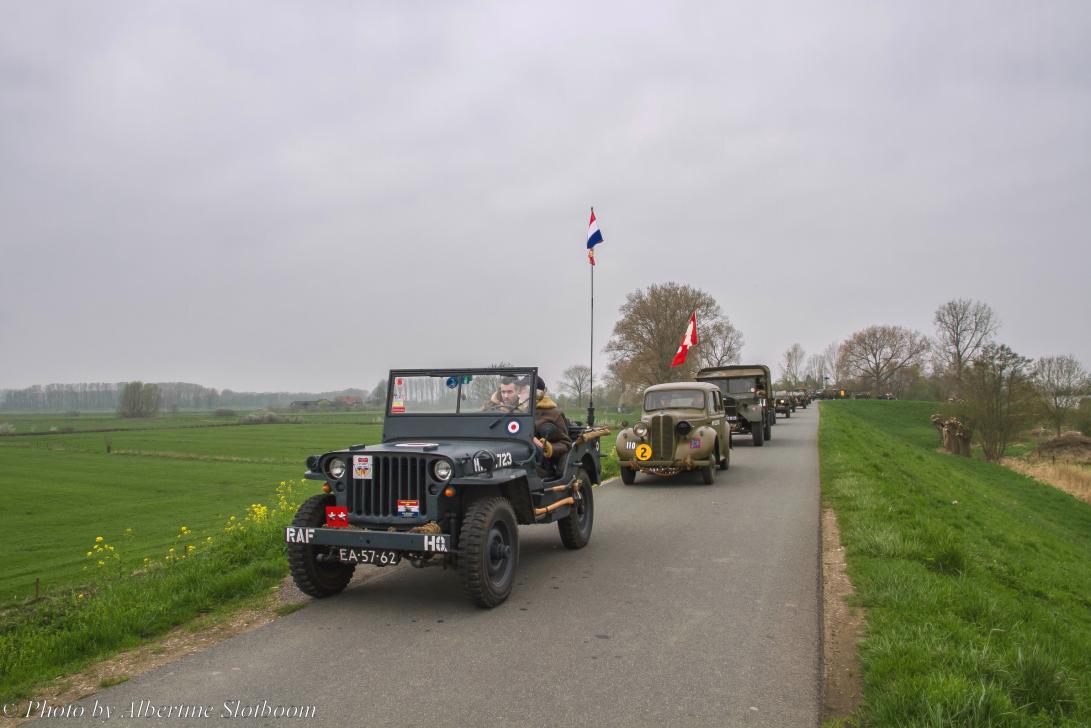
Commemoration Operation Quick Anger 2018: A convoy of historic WWII military vehicles on a small dyke road near Westervoort. Towards the end of WWII, Operation Quick Anger was a major Allied military operation intended to liberate Arnhem. The operation began on 12 April 1945, when Allied troops crossed the River IJssel from the east near Westervoort. Arnhem was liberated on 14 April 1945.

Operation Quick Anger Commemoration and Memorial Tour 2018: In our own WWII Ford GPW Jeep, together with other WWII military vehicles, we drove through the Liemers region, where, in 1945, the Allies advanced towards the IJssel at Westervoort. During WWII each division had its own insignia, carried by all vehicles of the division. The same insignia were also worn by soldiers on the sleeves of their combat uniforms.

Westervoort, Operation Quick Anger Commemoration and Memorial Tour 2018: A convoy of WWII military vehicles driving on the narrow dyke road between Groessen and Oud-Zevenaar, two villages in the Liemers, a small rural region in the Netherlands, east of the River IJssel. This area formed the front line from September 1944 to April 1945. The Allies must have endured immense hardship during that bitterly cold winter. The Operation Quick Anger Memorial Tour commemorates the soldiers who fought for freedom of our country.

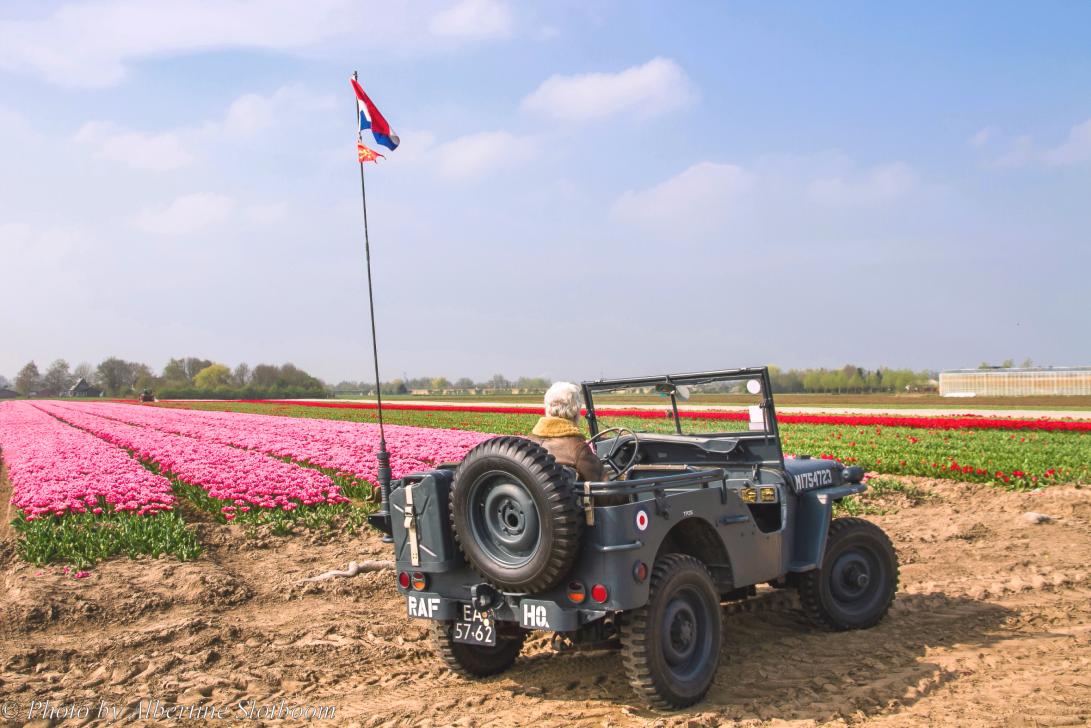
Westervoort, Operation Quick Anger Commemoration and Memorial Tour 2018: A WWII Ford GPW Jeep in front of a tulip field in the Liemers, a small region southeast of Arnhem, situated in the eastern part of the Netherlands between the Dutch-German border and the Lower Rhine, IJssel and Oude IJssel rivers. Fierce fighting took place here at the end of WWII; villages and towns suffered heavy damage. Ultimately, this area was liberated by the First Canadian Army in April 1945.

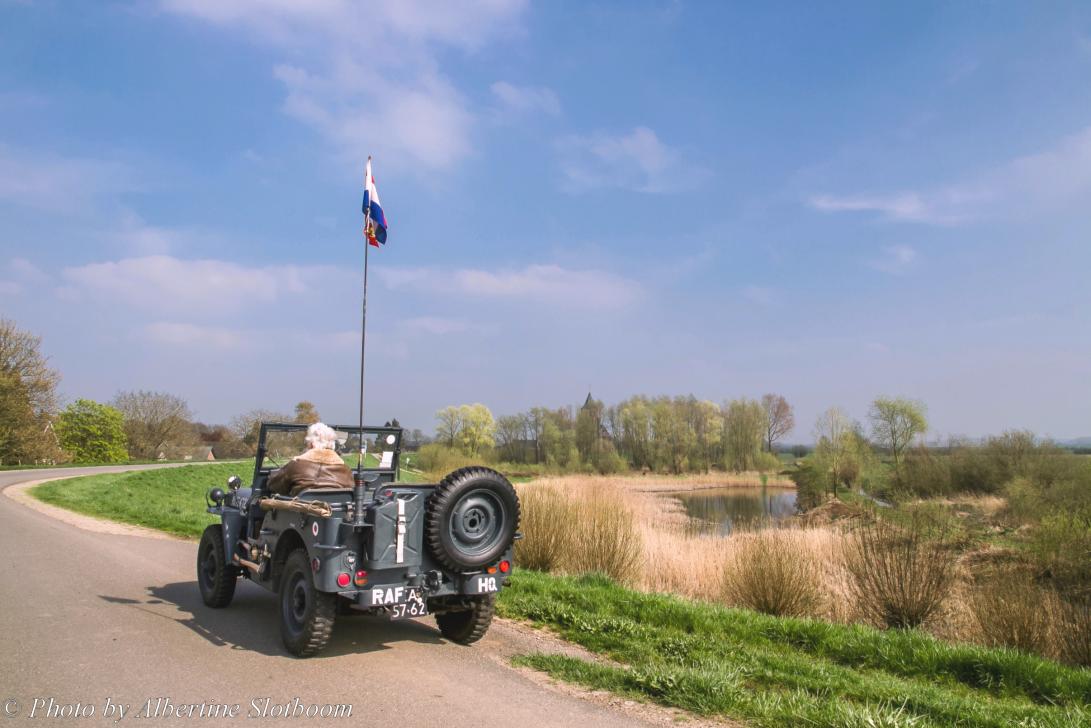
Operation Quick Anger Commemoration and Memorial Tour 2018: A 1942 Ford Jeep on the Ooyse dyke between the Dutch villages of Oud-Zevenaar and Groessen. We drove along the Rijnstrangen – the backwaters and ponds of the Rhine – and the Wejenwaard, floodplain areas with reeds and pollard willows. Both wetlands are part of the nature reserve Gelderse Poort. Towards the end of WWII, as the Canadians advanced, the Germans flooded the Rijnstrangen area. Oud-Zevenaar lay in the line of fire and suffered heavy damage.

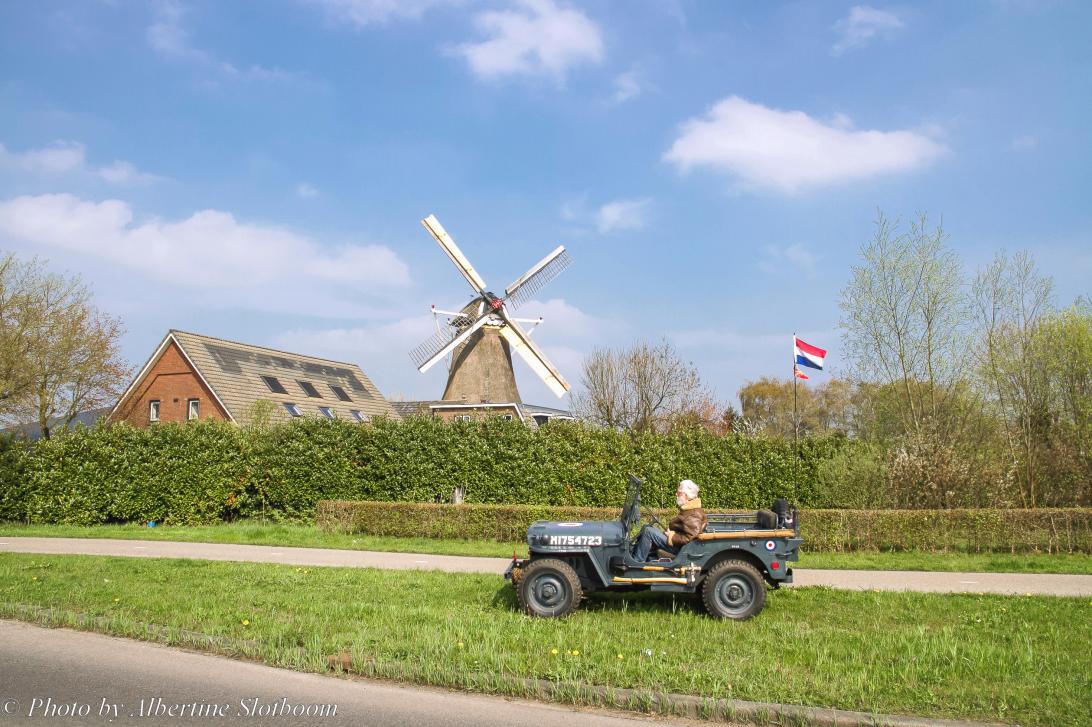
Operation Quick Anger Commemoration and Memorial Tour 2018: A WWII Ford GPW Jeep in front of the Hoop windmill in the Dutch village of Oud-Zevenaar. The windmill was constructed in 1850 and was used to grind grain into flour. The barn next to the windmill was completely destroyed during an accidental Allied bombing raid in March 1945; the miller and his son lost their lives in the incident. The windmill was heavily damaged and was not restored until 1957–1963. The Hoop windmill is still in working condition and now sells products to home bakers.

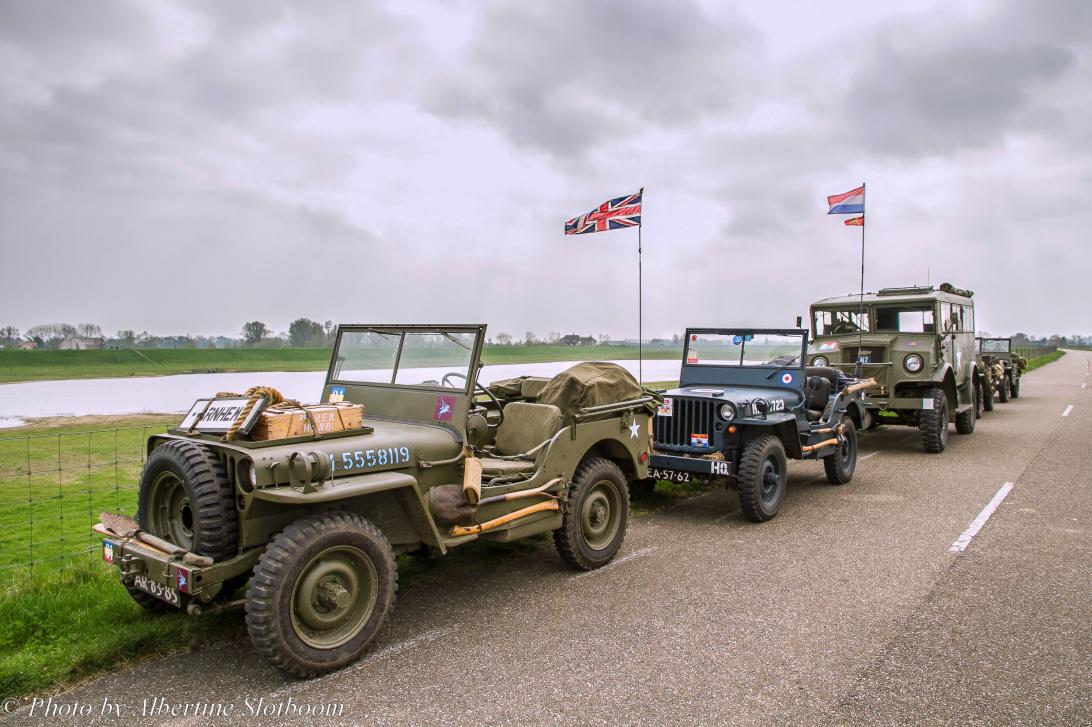
Westervoort, Operation Quick Anger Commemoration and Memorial Tour 2018: WWII military vehicles – a Willys MB Jeep, a Ford GPA Jeep and a Canadian Chevrolet C8A Truck – on the narrow dyke road in the rural area east of the River IJssel. After the memorial tour, the vehicles were lined up along the dyke near the 'Crossing to Liberation' monument, before the drivers and passengers joined the commemoration ceremony at this war memorial. One of them recited the moving poem 'For the Fallen'.

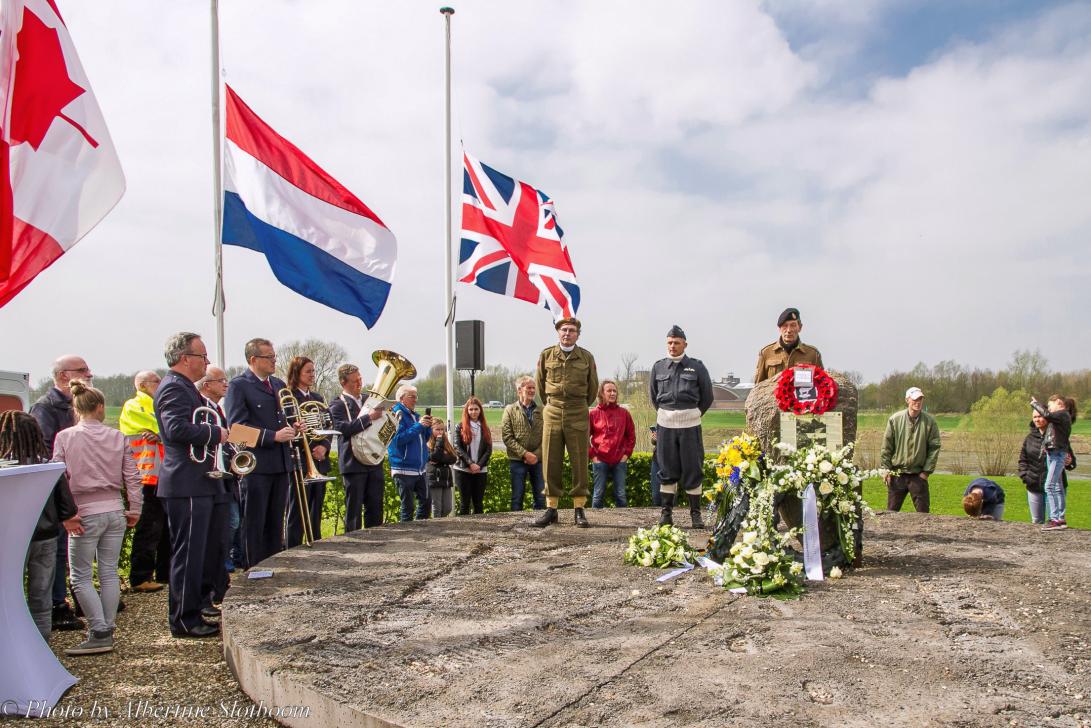
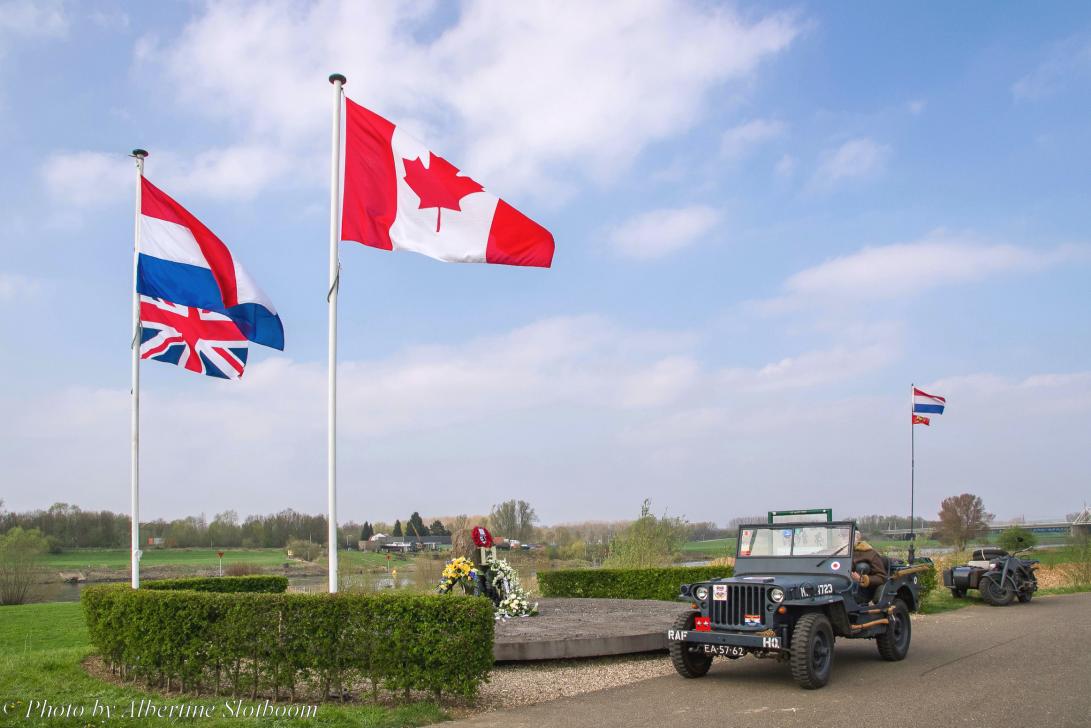
Operation Quick Anger Commemoration 2018: The memorial ceremony of Operation Quick Anger at the Crossing to Liberation Monument. This monument lies on the eastern bank of the River IJssel near Westervoort. In the early spring of 1945, the Western Allied forces launched several military operations to liberate the western and northern part of the Netherlands; one of them was Operation Quick Anger. At this exact spot on the IJssel, the first Allied troops crossed the river towards Arnhem on 12 April 1945.

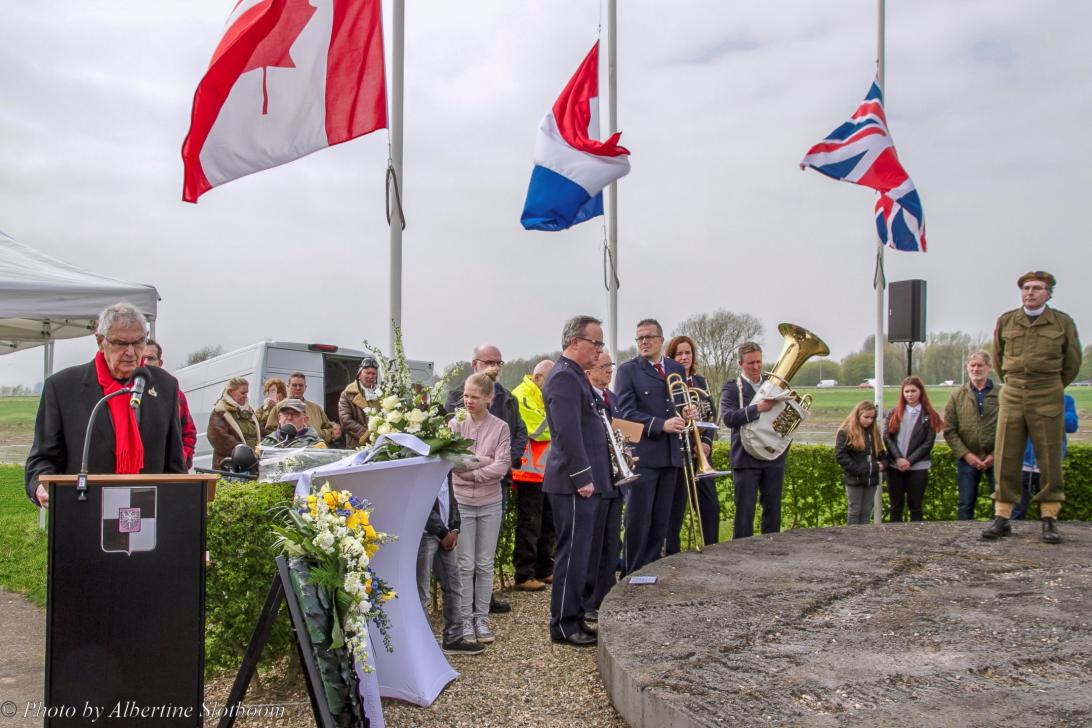
Westervoort, Operation Quick Anger Commemoration 2018: The Dutch resistance fighter and WWII veteran Toon Kramer (96), who also served as an interpreter and translator for the Allies during Operation Quick Anger, gave a speech. The flags of Canada, the Netherlands and Great Britain flew at half-mast as a symbol of respect for the fallen soldiers of Operation Quick Anger. Toon Kramer joined the British Polar Bears, who fought under Canadian command, and took part in the IJssel Crossing at this location in Westervoort. Toon Kramer passed away two years after this commemoration.

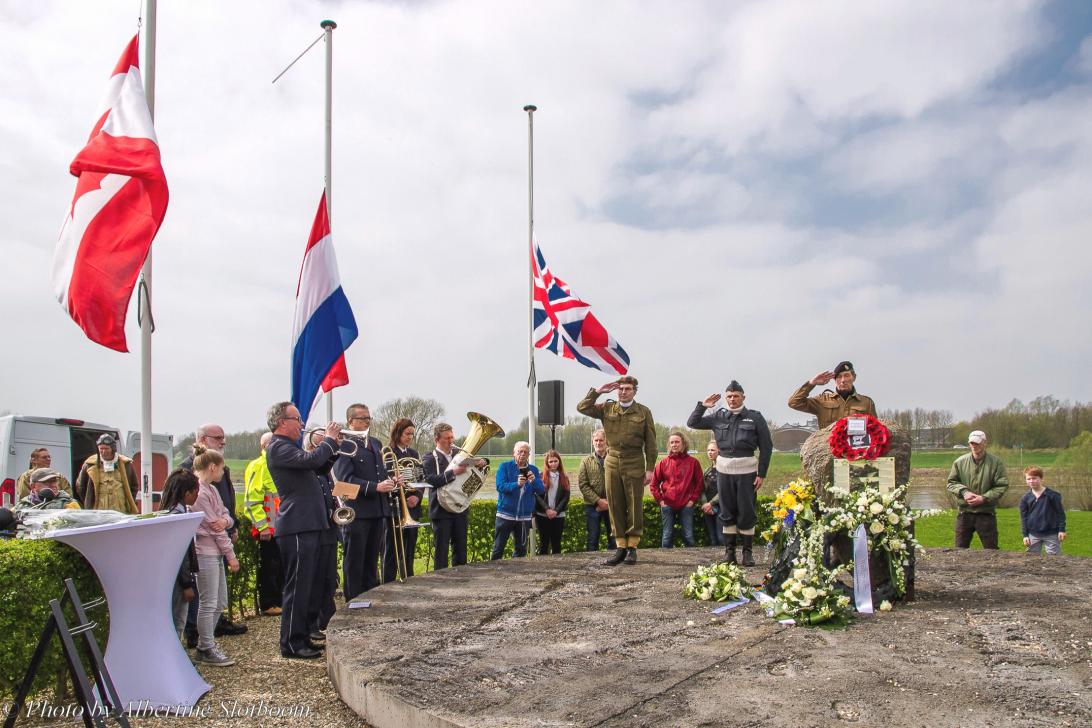
Commemoration Operation Quick Anger 2018: The memorial ceremony of Operation Quick Anger at the Crossing to Liberation war monument near Westervoort. Three soldiers saluted the national flags of Canada, the Netherlands and Great Britain during the touching sounding of the Last Post, the traditional final salute to the fallen. During the crossing of the River IJssel and the subsequent battle to liberate Arnhem, 62 Allied soldiers lost their lives.

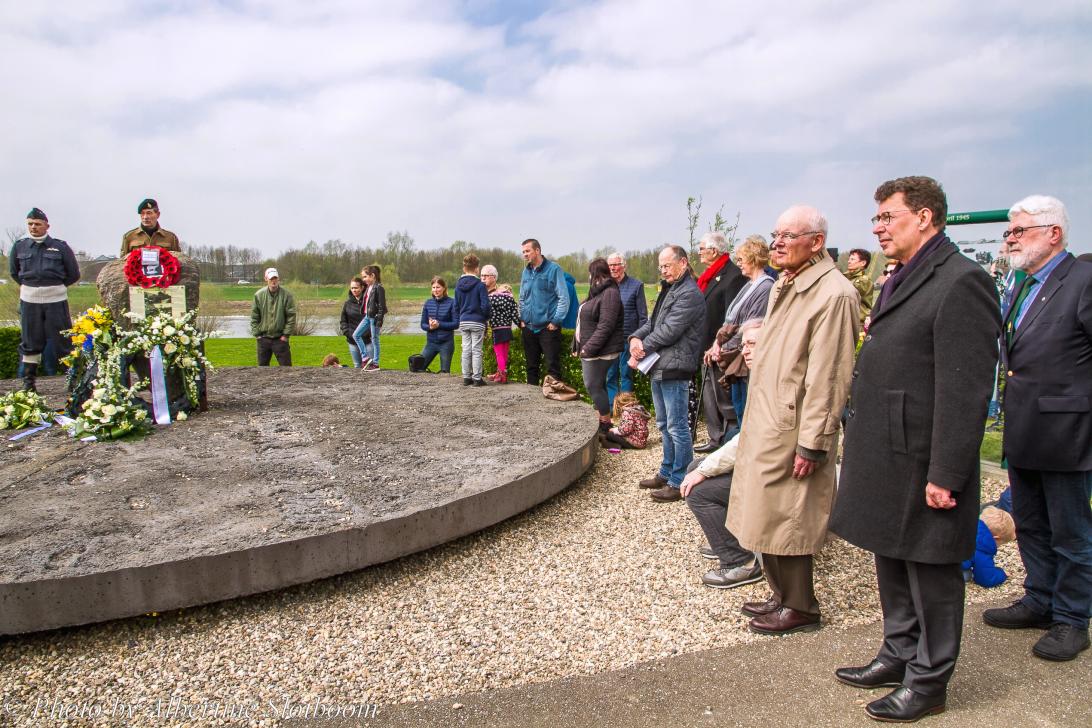
Westervoort, Commemoration Operation Quick Anger 2018: The memorial ceremony of Operation Quick Anger at the Crossing to Liberation Monument on the bank of the IJssel was attended by Clemens Cornielje, the King's Commissioner for Gelderland, Arend van Hout, the Mayor of Westervoort, the distinguished WWII veteran Toon Kramer, and several descendants of soldiers who were killed during Operation Quick Anger.

Westervoort, Commemoration Operation Quick Anger 2018: A 1942 Ford GPW Jeep in front of the Crossing to Liberation monument. It consists of a round concrete slab bearing traces of vehicle tracks and soldiers' footprints; in the centre stands a fieldstone with a panel. This WWII memorial is situated on the bank of the IJssel at Westervoort; it is one of the many monuments on the Liberation Route Europe.

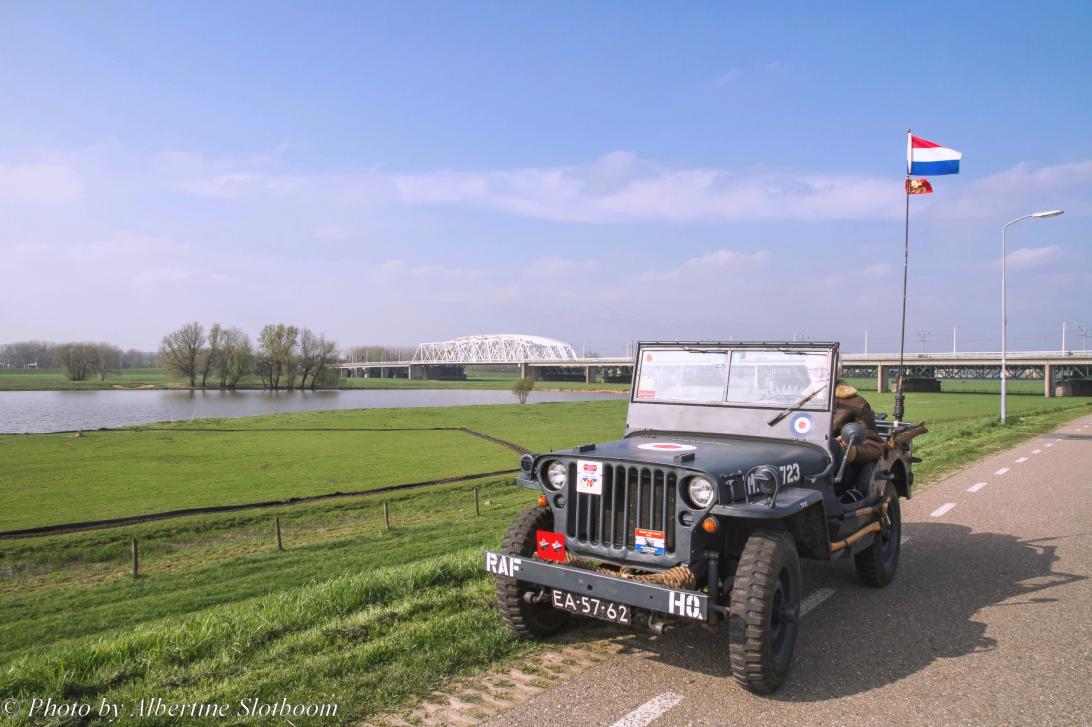
Westervoort, Operation Quick Anger Commemoration and Memorial Tour 2018: Our WWII Ford Jeep during the memorial tour, with the bridge across the River IJssel in the background. Early in 1945, the Westervoort Bridge was completely destroyed by the Germans. The temporary bridge constructed by the Allies was replaced shortly after WWII by a semi-permanent Bailey bridge on fixed piers. This bridge was replaced by a new road bridge in 1971, while the railway bridge was not replaced until 1980.

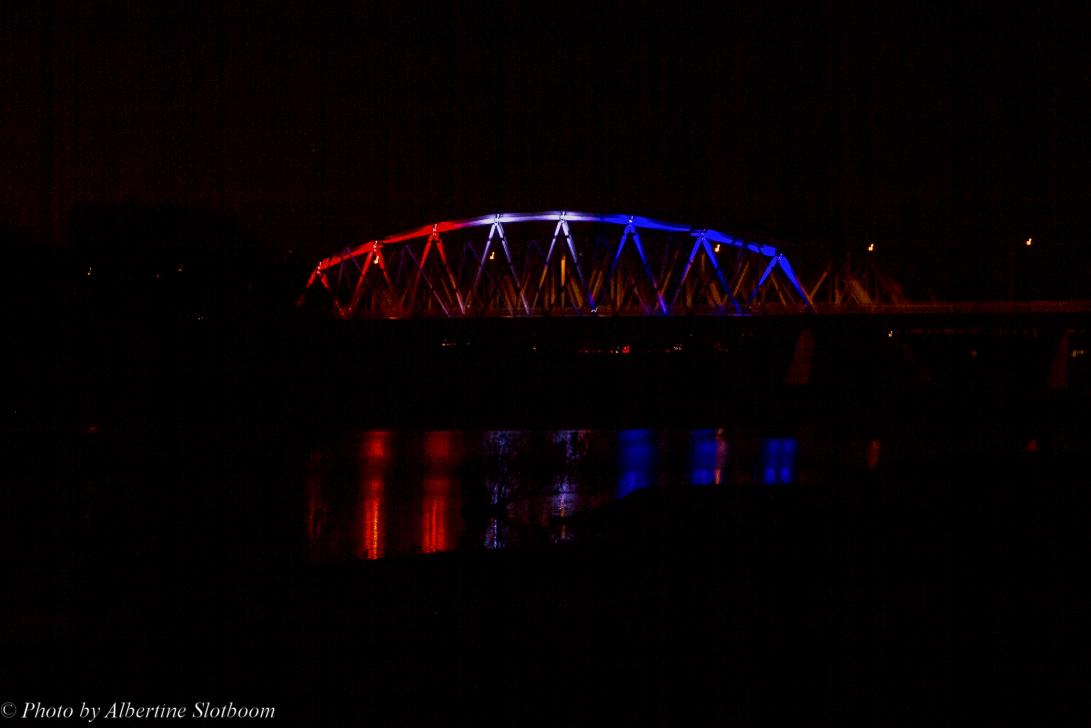
Operation Quick Anger Commemoration 2018: During the commemorations of this military operation, the bridge over the River IJssel at Westervoort is illuminated with LED lights in the colours of the Dutch flag. The lighting remains on from sunset to sunrise. The bridge is also illuminated on other significant occasions, such as Remembrance Day on 4 May as well as on 5 May and King's Day.