Commemorating the 65th anniversary of D-Day – Normandy 2009: A memorial tour through Normandy in a 1942 Ford GPW Second World War Jeep; a road trip to attend and honour the commemorations of the 70th anniversary of D-Day. During our journey along the coast of Normandy, we paid visits to a number of museums and memorials dedicated to the Allied invasion of Normandy in 1944 and the historic D-Day landing beaches.
In June 1944, these beaches were code-named Utah, Omaha, Gold, Juno, and Sword, and since then their real names have been largely forgotten. We also paid visits to military cemeteries containing the memorials and graves of soldiers who were killed during the many battles in Normandy, including the Normandy American Cemetery and Memorial in Colleville-sur-Mer at Omaha Beach, where the endless rows of white crosses are deeply moving. This is not the largest Second World War military cemetery in Normandy; that is the austere German military cemetery at La Cambe, only a few kilometres from Omaha Beach, near Bayeux.
Numerous remains of the Atlantic Wall and the D-Day landings can still be viewed along the entire coast of Normandy, including the remains of the Mulberry Harbour on Gold Beach at Arromanches-les-Bains. The Atlantic Wall was a massive coastal defence system, built during the Second World War by Nazi Germany as a defence against the Western Allied invasion and the liberation of Nazi-occupied Europe.
Every year, numerous commemorations take place to mark the anniversary of D-Day. Owners of Second World War military vehicles are invited to attend several anniversary ceremonies for D-Day. Our own 1942 Ford GPW Jeep was on display on Juno Beach, in front of Canada House in Bernières-sur-Mer, during the impressive 70th anniversary commemorations of the landings. We also participated in a memorial tour through Courseulles-sur-Mer.
It was deeply moving to be part of these commemorations, which reminded us of the immense price that was paid for our freedom.
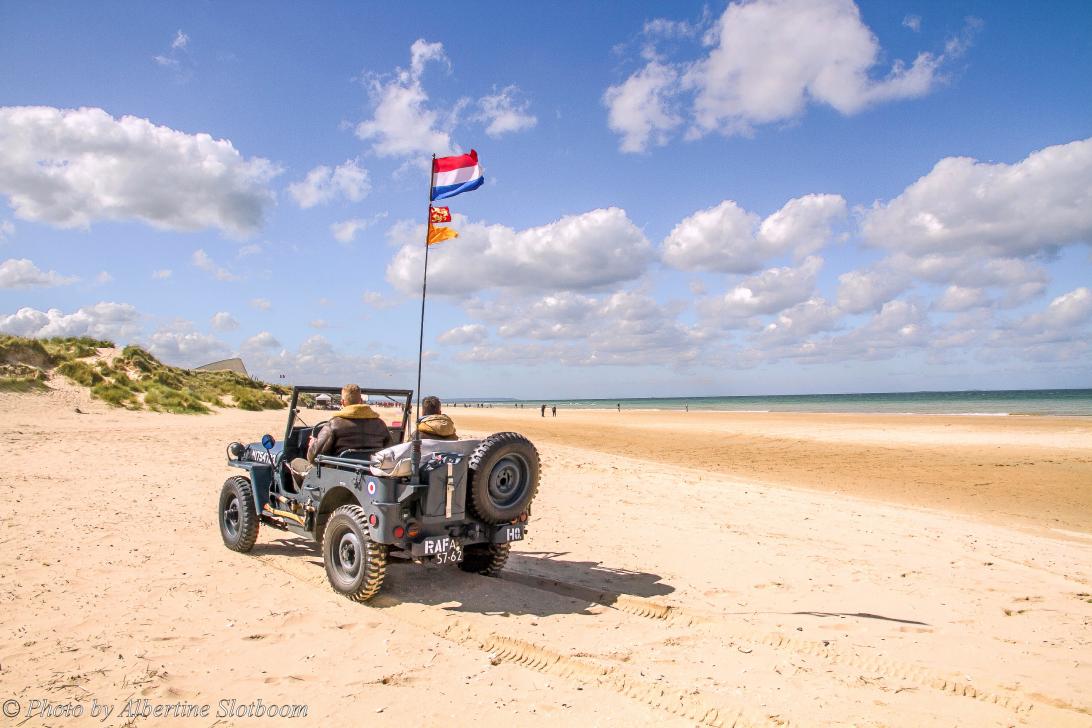
Memorial tour along the Normandy landing beaches: Our Jeep on Utah Beach, with the iconic Utah Beach D-Day Museum just visible in the background. We took this tour in our 1942 Ford GPW World War II Jeep along the coast of Normandy. We visited the historic D-Day beaches, the museums and imposing memorials of the Western Allied invasion of Normandy in 1944. Utah Beach was the codename for the westernmost of the five Allied landing beaches in Normandy, where Allied soldiers fought and died for our freedom.
Memorial tour along the Normandy landing beaches: Our Jeep on Utah Beach, with the iconic Utah Beach D-Day Museum just visible in the background. We took this tour in our 1942 Ford GPW World War II Jeep along the coast of Normandy. We visited the historic D-Day beaches, the museums and imposing memorials of the Western Allied invasion of Normandy in 1944. Utah Beach was the codename for the westernmost of the five Allied landing beaches in Normandy, where Allied soldiers fought and died for our freedom.
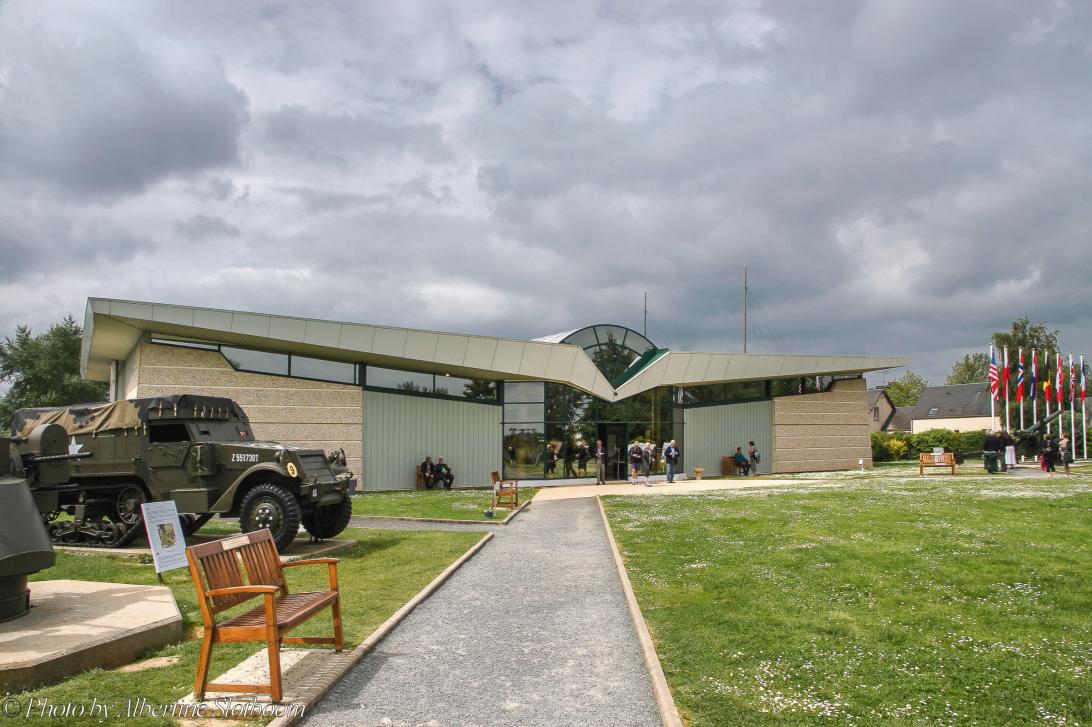
Commemorating D-Day in Normandy: During our memorial tour through Normandy in 2014, we visited the Pegasus Memorial Museum in Ranville. This museum has been designed to resemble a glider from the front. This museum houses numerous objects from the first action on D-Day, including an authentic airborne Jeep, uniforms, equipment, photographs, and a 'Rupert', one of the paradummies dropped over Normandy. These dummies were created to deceive the Nazi forces during the D-Day landings on 6 Juni 1944.

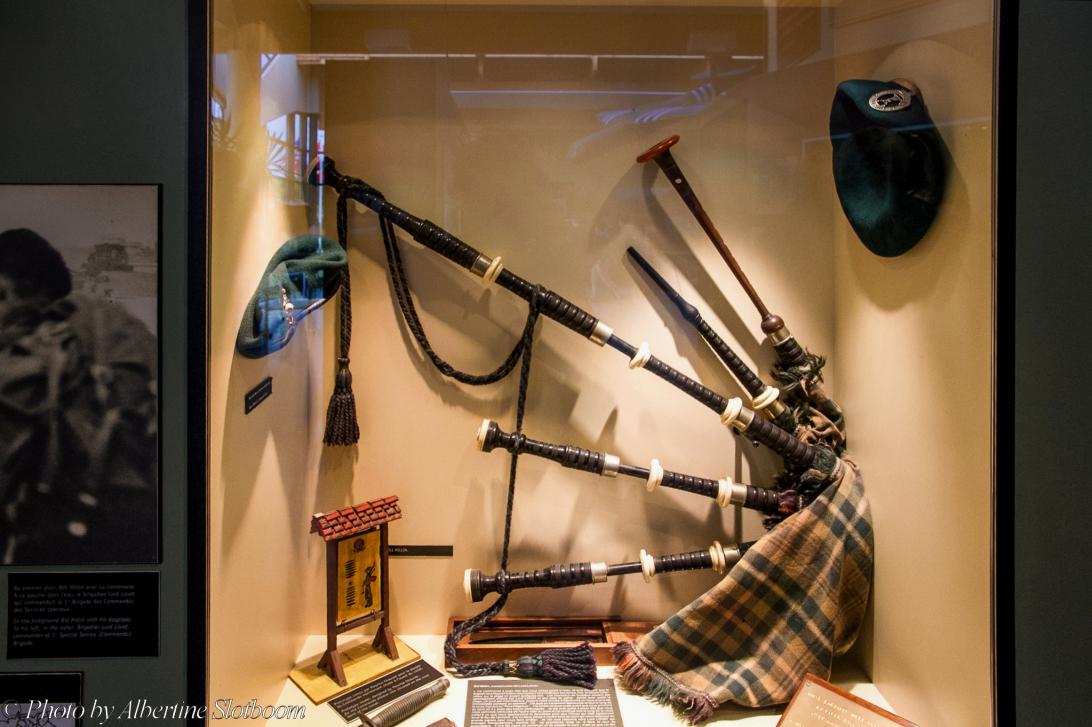
Commemorating D-Day in Normandy: One of the objects exhibited in the Pegasus Memorial Museum in Ranville is the bagpipes of Bill Millin, commonly known as Piper Bill or the Mad Piper. Bill Millin is best remembered for playing the bagpipes while under enemy fire during the D-Day landings. Bill Millin was the personal piper to Simon Fraser, the 15th Lord Lovat, commander of the 1st Special Service Brigade. Fraser and Millin survived WWII. Millin became widely known thanks to the 1962 film 'The Longest Day' (1962).

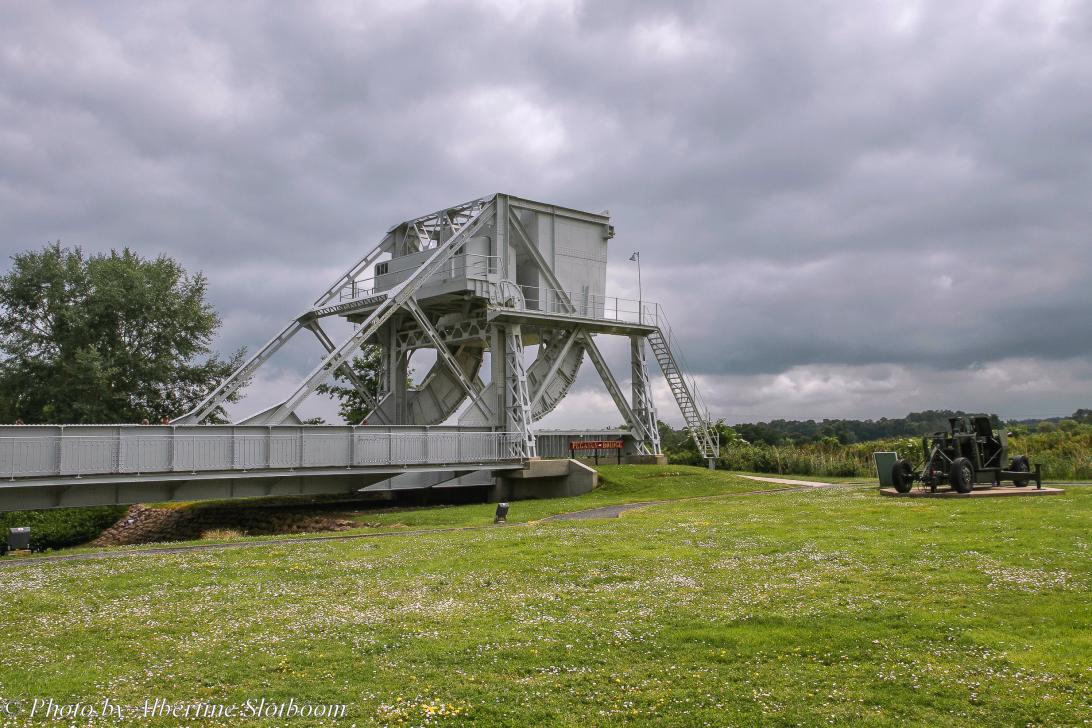
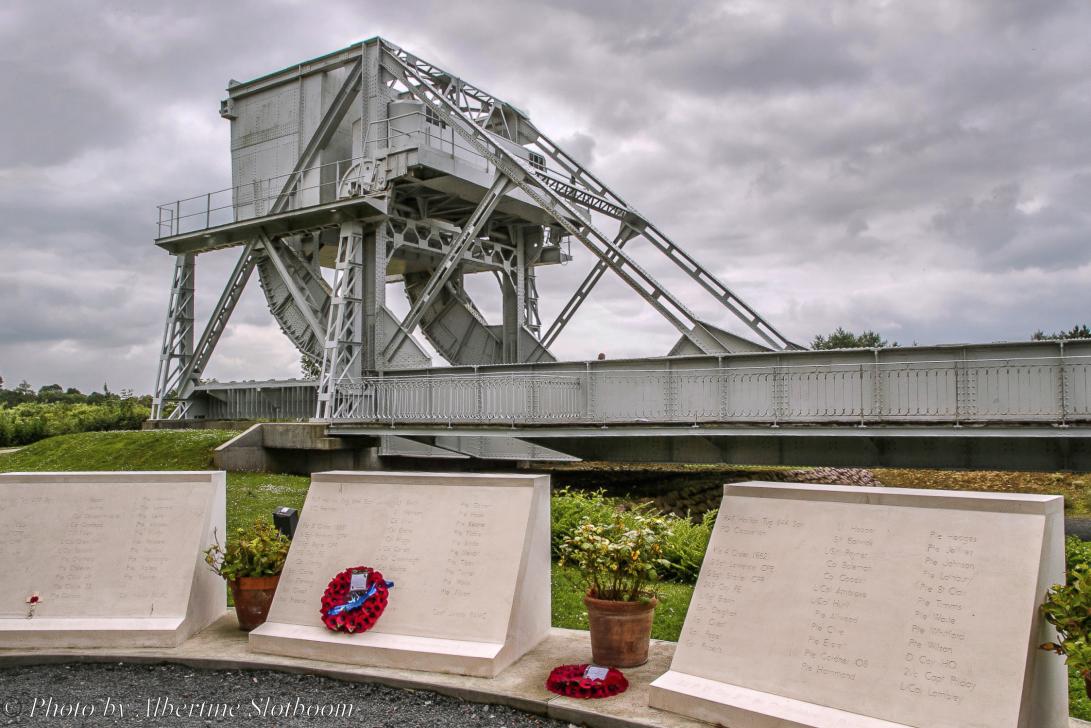
Commemorating D-Day in Normandy: The Veterans Charity Memorial and the original Pegasus Bridge are situated in the grounds of the Pegasus Memorial Museum in Ranville. The memorial is dedicated to the men of the 6th Airborne Division who landed at Ranville in the early hours of 6 June 1944. In only ten minutes, they captured two road bridges intact and liberated Ranville and Bénouville. Operation Deadstick was the codename for the operation to capture these two important bridges.

Commemorating D-Day in Normandy: The original Pegasus Bridge, on display at the Pegasus Memorial Museum in Ranville. After the daring capture of the Bénouville bridge, deep behind enemy lines, the 6th Airborne Division under the command of Major John Howard had to wait several hours to be relieved by seaborne troops from Sword Beach. On 26 June 1944, only 20 days after the liberation of the area, the bridge was officially renamed Pegasus Bridge, after the emblem of the British airborne troops.

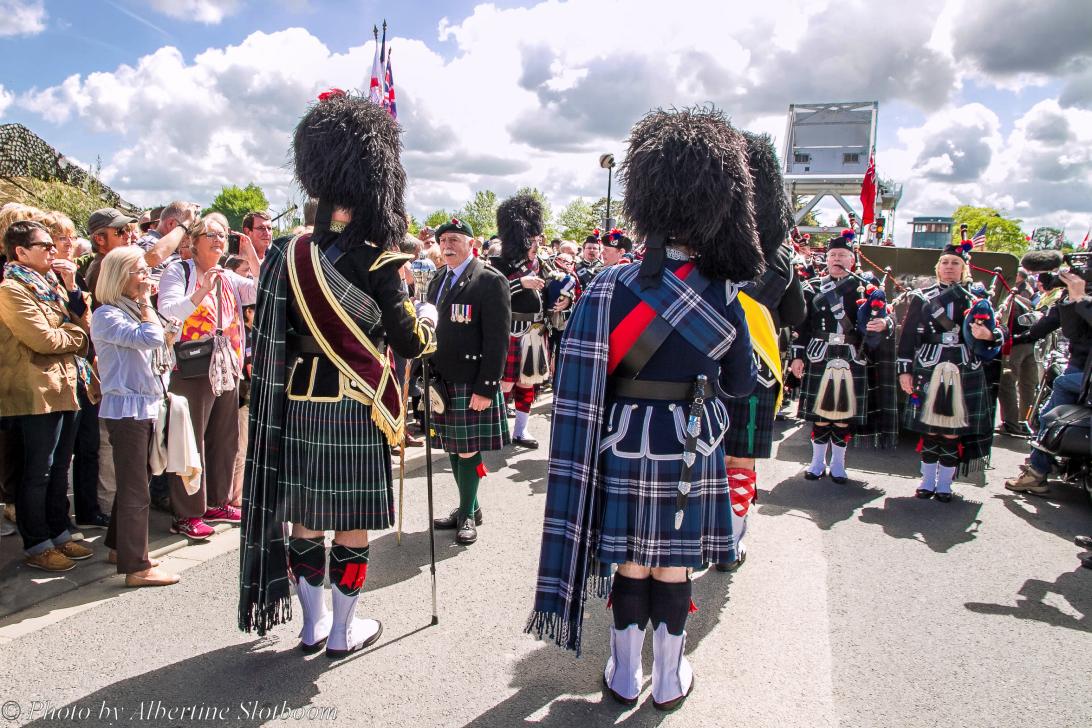
Commemorating D-Day in Normandy: A Scottish pipe and drum band on Pegasus Bridge at Ranville as part of the 70th anniversary commemorations of D-Day. They paid tribute to Piper Bill Millin, who landed on Sword Beach on D-Day, playing his bagpipes on the beach. He moved inland with the commando troops to relieve British paratroopers at Pegasus Bridge. This brave and iconic man also played the bagpipes when he crossed Pegasus Bridge with the commando troops of Lord Lovat.

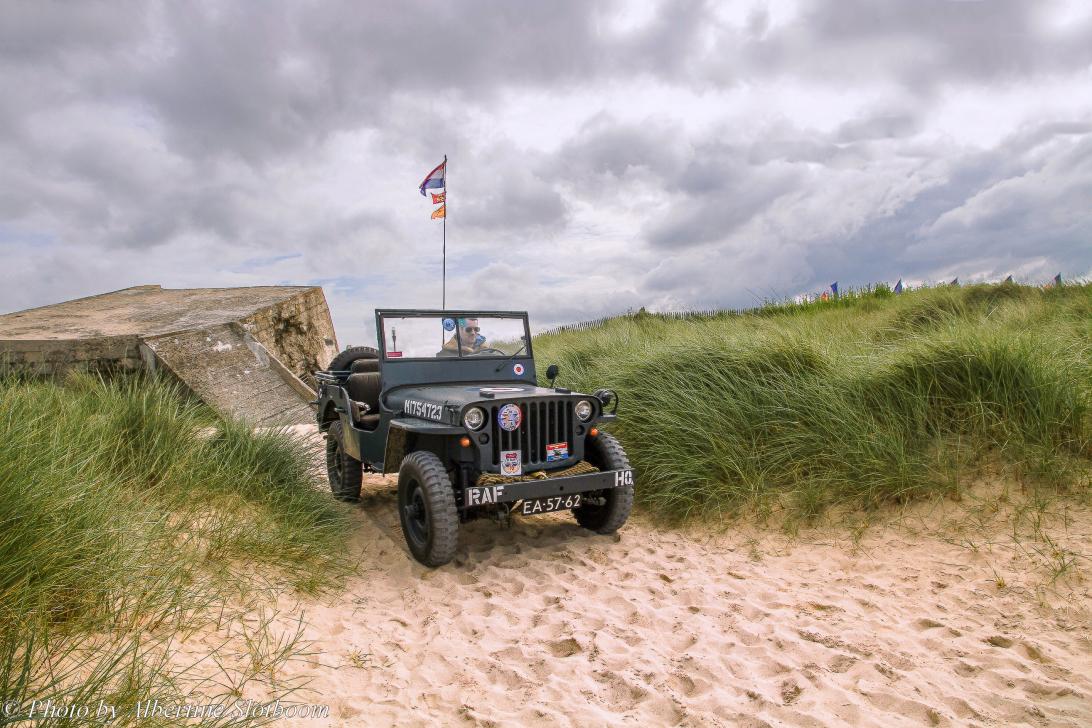
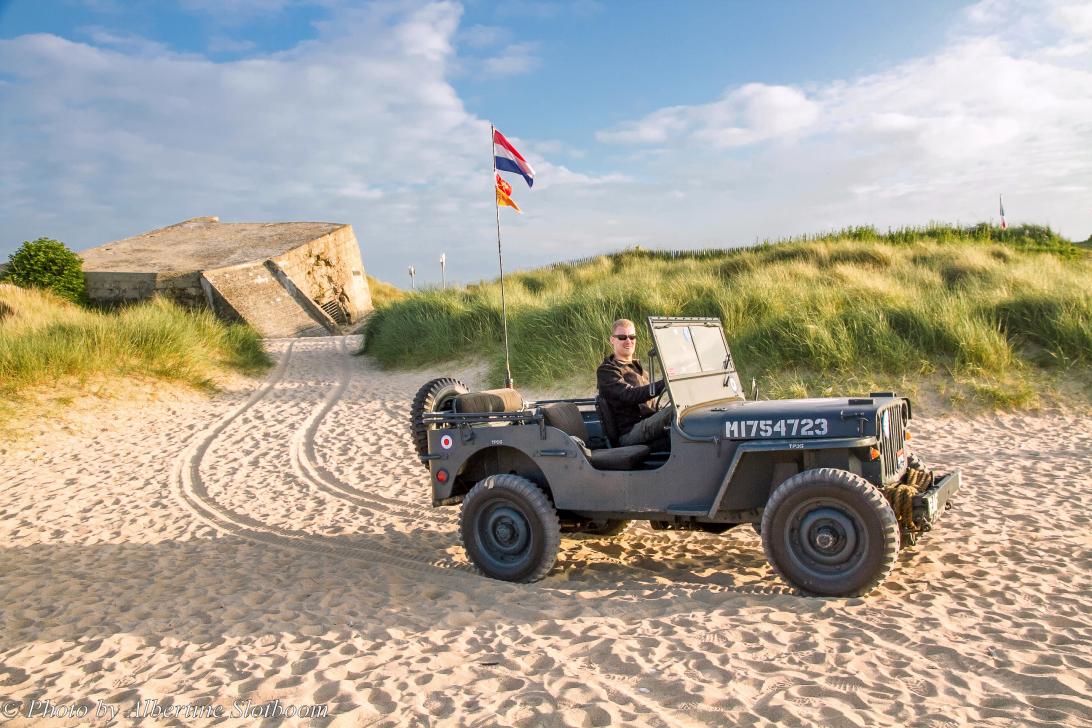
Memorial tour along the Normandy landing beaches: Our own WWII Ford Jeep on Juno Beach, with a German bunker of the Atlantic Wall in the background. Juno Beach is one of the five D-Day beaches in Normandy. Juno was the Allied codename for a 7-kilometre-long landing zone on the north coast of Normandy. This beach is situated near the coastal villages of Graye-sur-Mer, Courseulles-sur-Mer, Bernières-sur-Mer, and Saint-Aubin-sur-Mer.

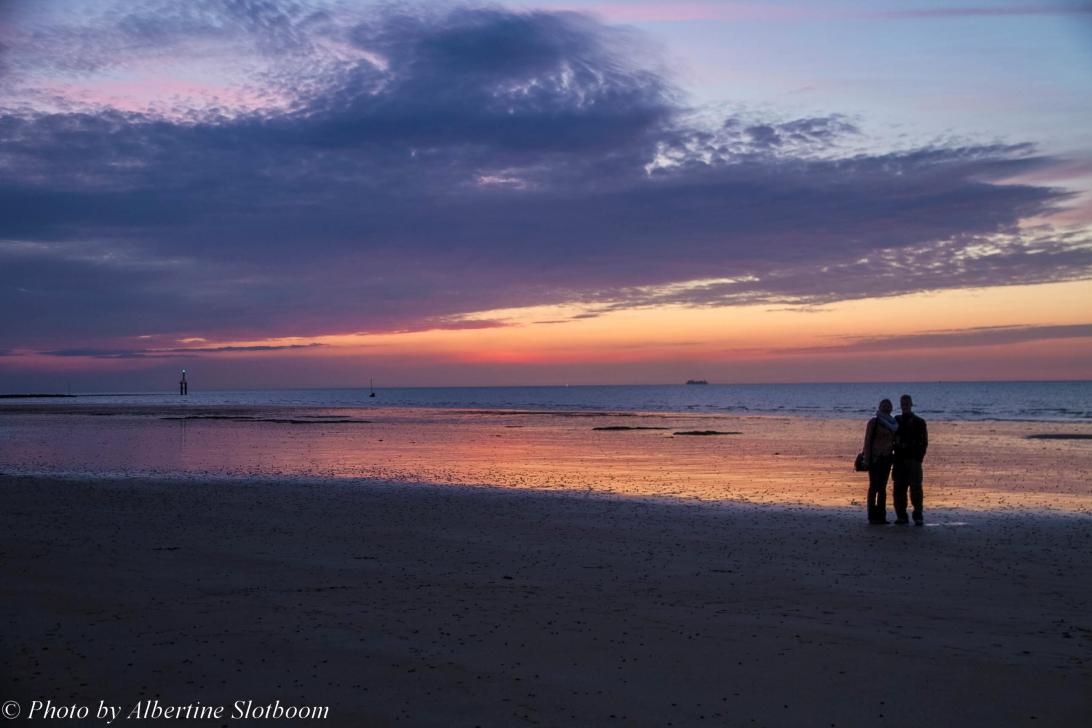
Memorial tour along the Normandy landing beaches: Watching a breathtaking sunset at Juno Beach, the evening before the 70th anniversary of D-Day. Now, Juno Beach is quiet and peaceful, but in June 1944, Canadian troops fought their way across the beach here. The Canadians suffered 5,500 casualties during the Allied invasion of Normandy. The first day of the invasion of Normandy is known as D-Day, and on this single day, 359 Canadian soldiers lost their lives on Juno Beach.

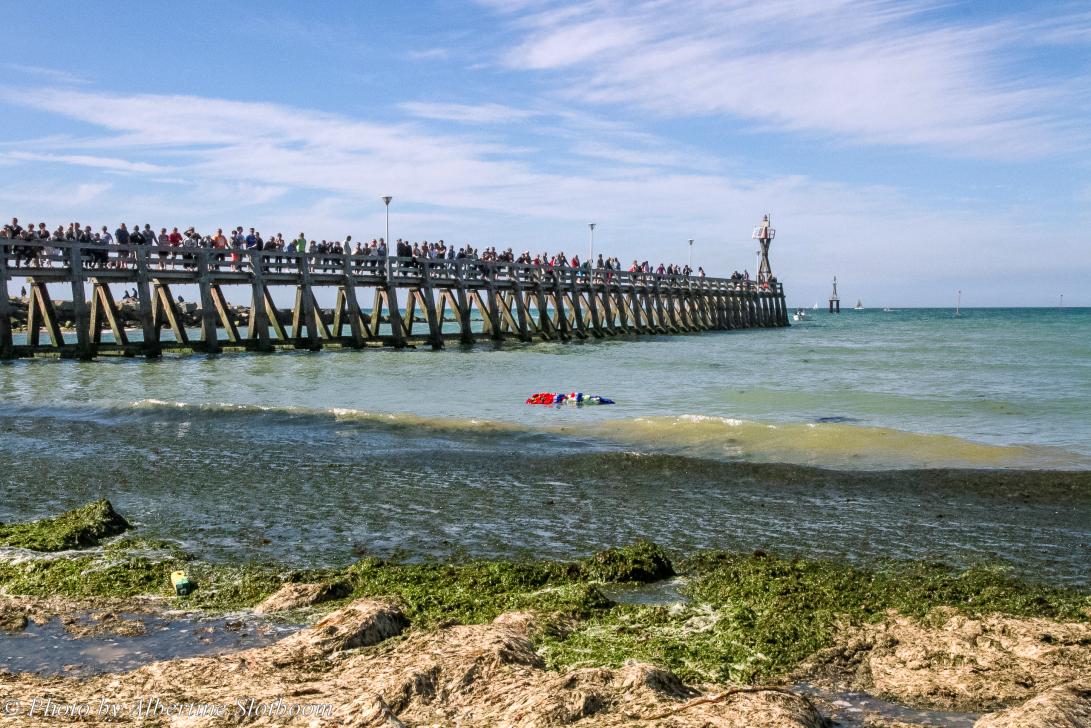
Memorial tour along the Normandy landing beaches: A floral wreath floating on the waves near the pier on Juno Beach in Courseulles-sur-Mer during a moving ceremony to commemorate the 70th anniversary of D-Day. On this day in June 1944, the largest amphibious invasion in history took place. Nearly 156,000 Allied troops landed on the coast of Normandy to liberate Western Europe from Nazi occupation. while more than 5,000 landing craft, 289 escort vessels and 277 minesweepers took part in this immense operation.

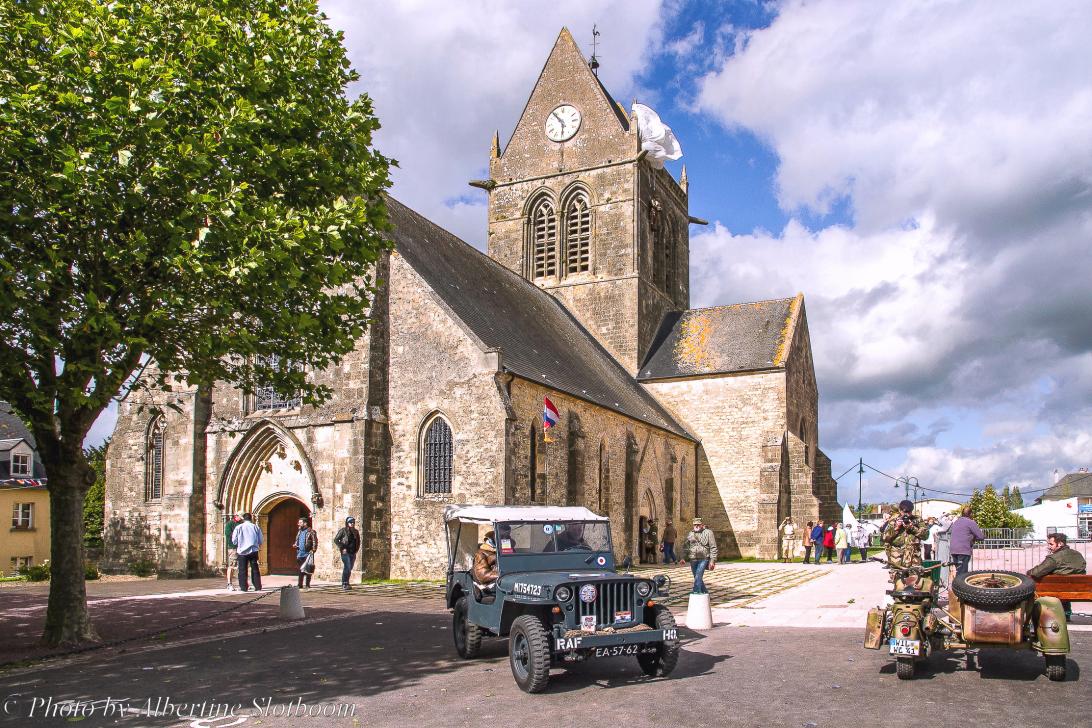
Memorial road trip through Normandy: Our own RAF-blue WWII Jeep in front of the church of Sainte-Mère-Église with an effigy of a paratrooper hanging from the tower. Sainte-Mère-Église is situated near Utah Beach. The small village is known for the landings of the US 82nd and 101st Airborne Divisions, which landed here on D-Day. Private John Steele landed on the church roof, and while sliding down, his parachute got stuck on a pinnacle of the tower, leaving him dangling there helplessly until he was captured by the Germans. He survived the war.

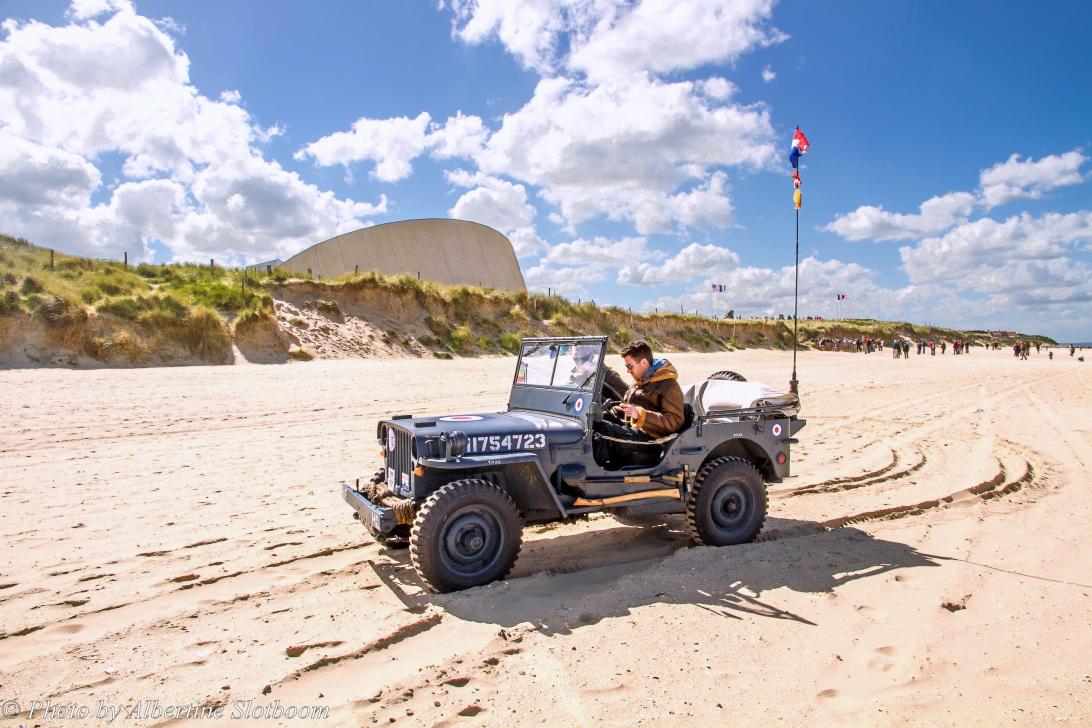
Memorial tour along the Normandy landing beaches: Driving our own 1942 Ford GPW Jeep on Utah Beach with the Utah Beach D-Day Museum in the background. Utah Beach marks the starting point of the Liberty Road, a commemorative route that connects Utah Beach to the Mardasson Monument in Bastogne. It marks the main route taken by the US Third Army under the command of General George Patton in 1944. The entire route is marked by 1,147 milestones (in French: bornes). In our own Jeep, we followed a leg of the Liberty Road along the coast of Normandy.

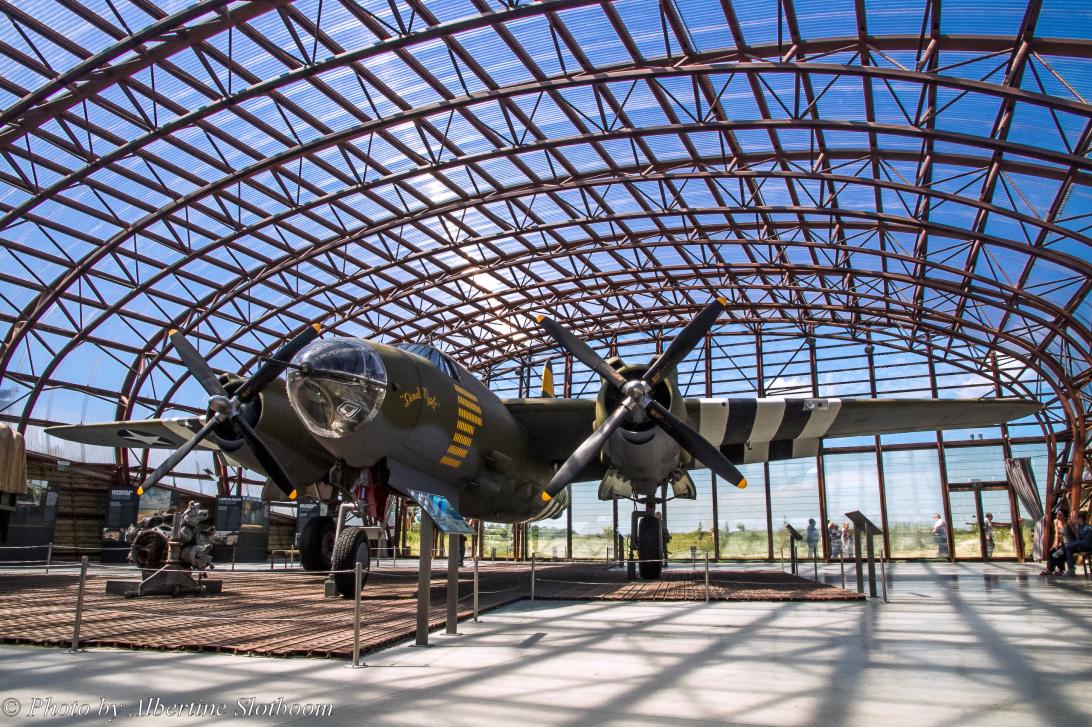
Memorial tour along the Normandy landing beaches: A Martin B-26 Marauder, an American bomber aircraft used by Allied forces during WWII, on display at the Utah Beach D-Day Museum near Sainte-Marie-du-Mont. Over 5,000 Martin B-26 Marauders were built; only six of them still exist. The Utah Beach D-Day Museum was built in 1962 on the beach, at the location where the first American troops landed on D-Day, 6 June 1944.

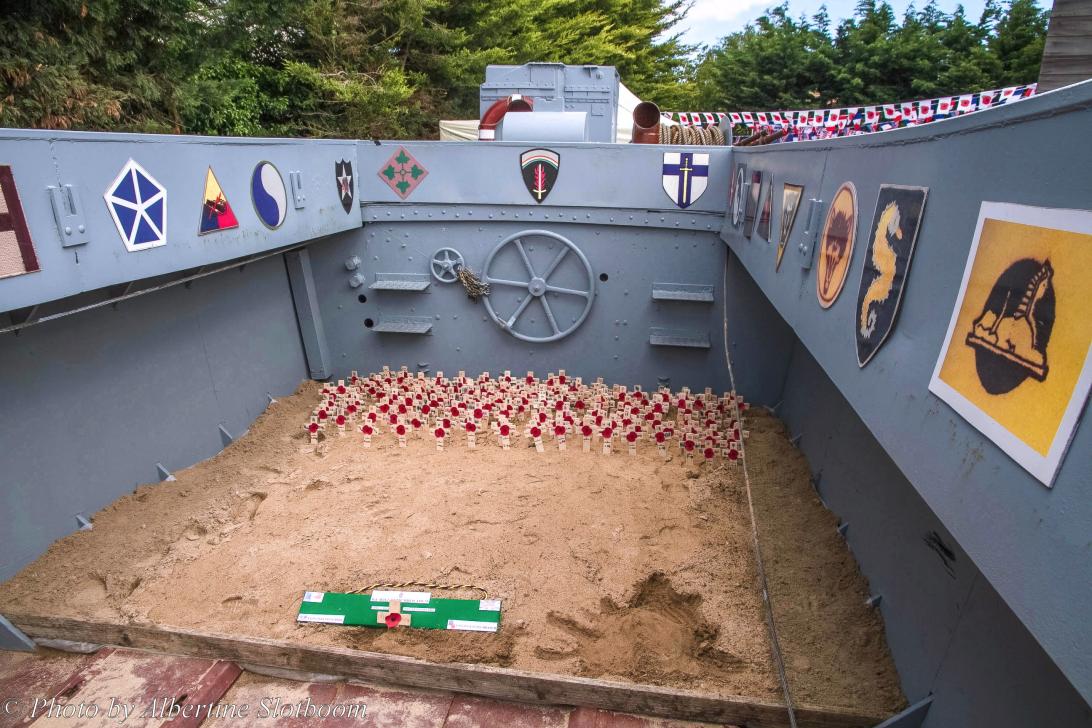
Commemorating D-Day in Normandy: Remembrance crosses with poppies, placed inside an Allied landing craft, serve as a memorial to those soldiers who fought and died in combat during the Allied invasion in 1944. This Allied landing craft was used during the D-Day landings in June 1944. It stands in front of Le Grand Bunker, the Atlantic Wall Museum near Sword Beach, in the village of Ouistreham. Sword was the Allied codename for the easternmost of the five landing beaches in Normandy.

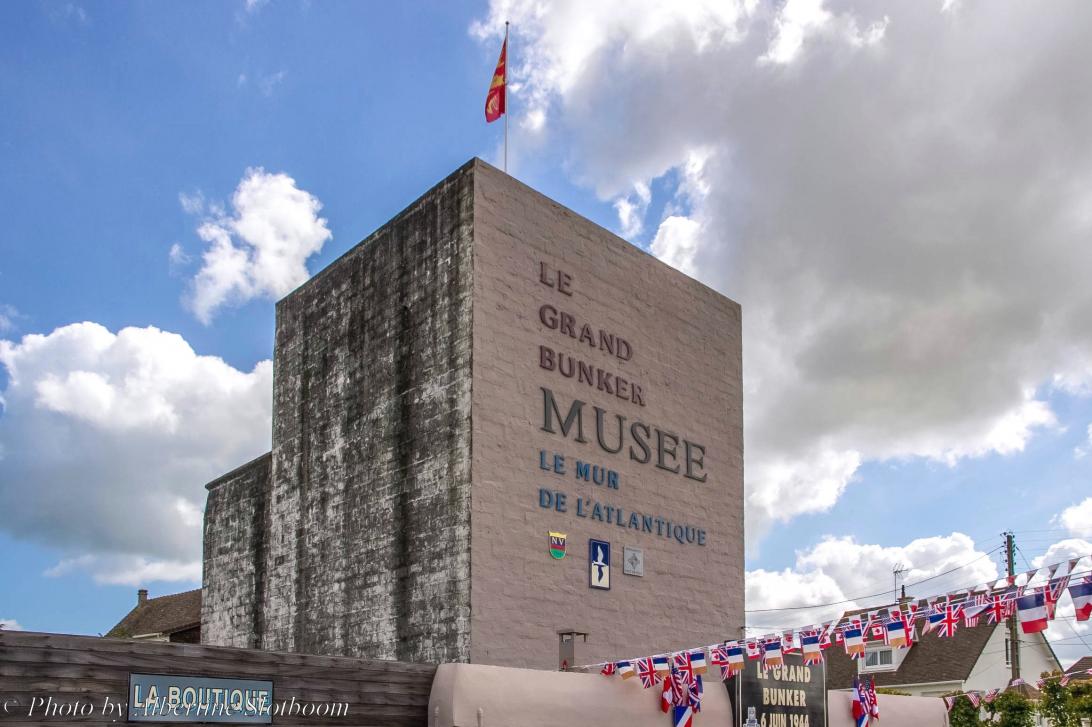
Memorial tour along the Normandy landing beaches: Le Grand Bunker is the Atlantic Wall Museum in Ouistreham. The Atlantic Wall Museum is entirely dedicated to the construction of the Atlantic Wall. Nazi Germany built the Atlantic Wall during WWII. This imposing conceet barrier was a more than 5,000-kilometre-long defensive line; it stretched along the North Sea and Atlantic coast, from Norway to the French-Spanish border. It consisted of bombproof bunkers, coastal batteries and fortifications.

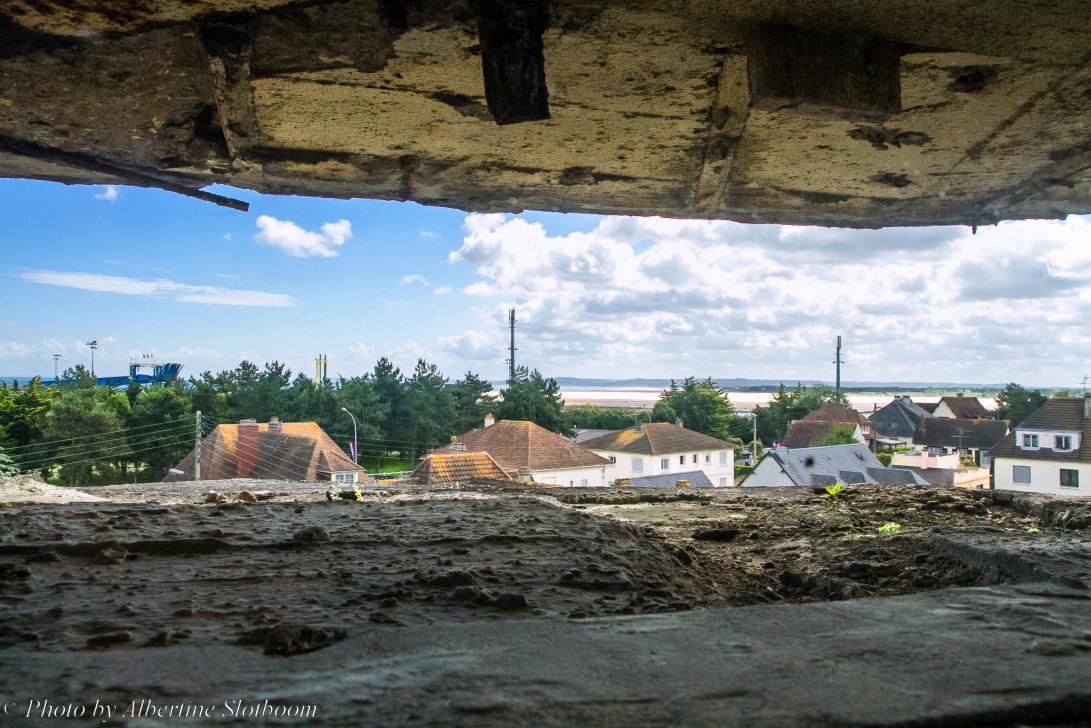
Memorial tour along the Normandy landing beaches: View over Ouistreham and Sword Beach from the top floor of the Grand Bunker (Le Grand Bunker). This enormous, towering bunker is situated in the coastal village of Ouistreham and houses the Atlantic Wall Museum. Sword Beach was the easternmost landing area of D-Day. During WWII, this 17-metre-high concrete bunker was the German command post for a large section of the Atlantic Wall along the Normandy coast. On D-Day, 10,273 of the planned 15,000 bunkers of the Atlantic Wall were completed; 799 bunkers were still under construction.

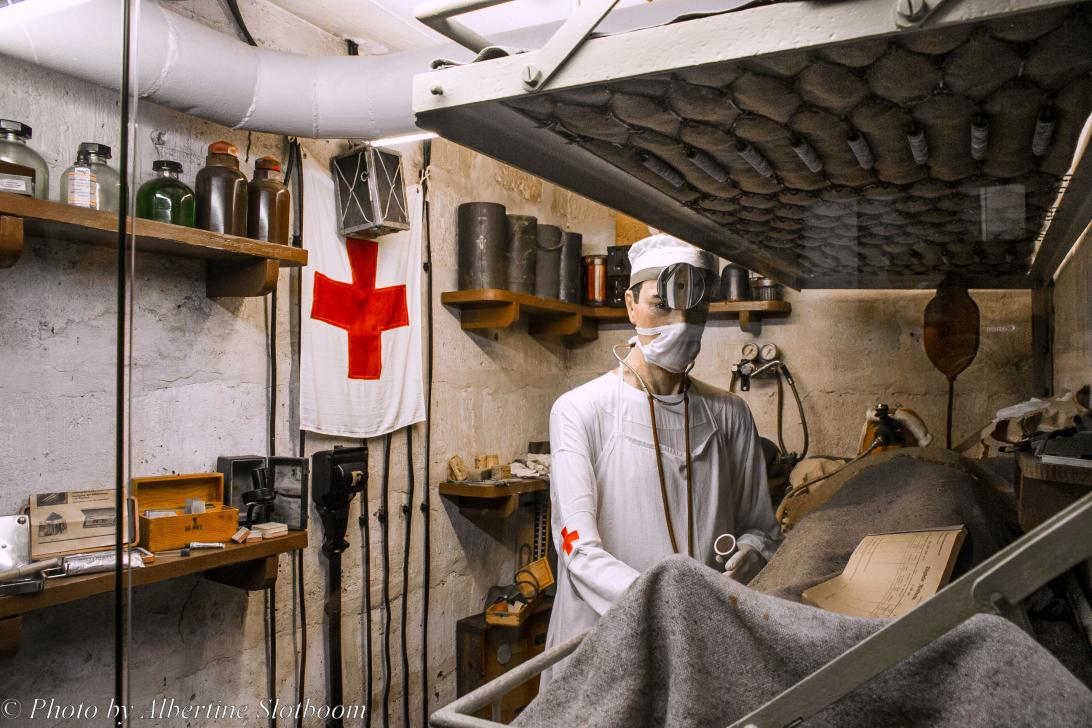
Memorial tour along the Normandy landing beaches: The sick bay inside Le Grand Bunker, the Atlantic Wall Museum in Ouistreham. The interior of this imposing German bunker has been reconstructed down to the smallest details and is entirely dedicated to the Atlantic Wall. There are numerous rooms, including a complete radio transmission room and a generator room, a dormitory, an ammunition store, and an observation post equipped with a range-finder, as well as many objects concerning the construction of the Atlantic Wall. Despite its solid concrete and steel construction, this bunker was captured by British soldiers on 9 June 1944.

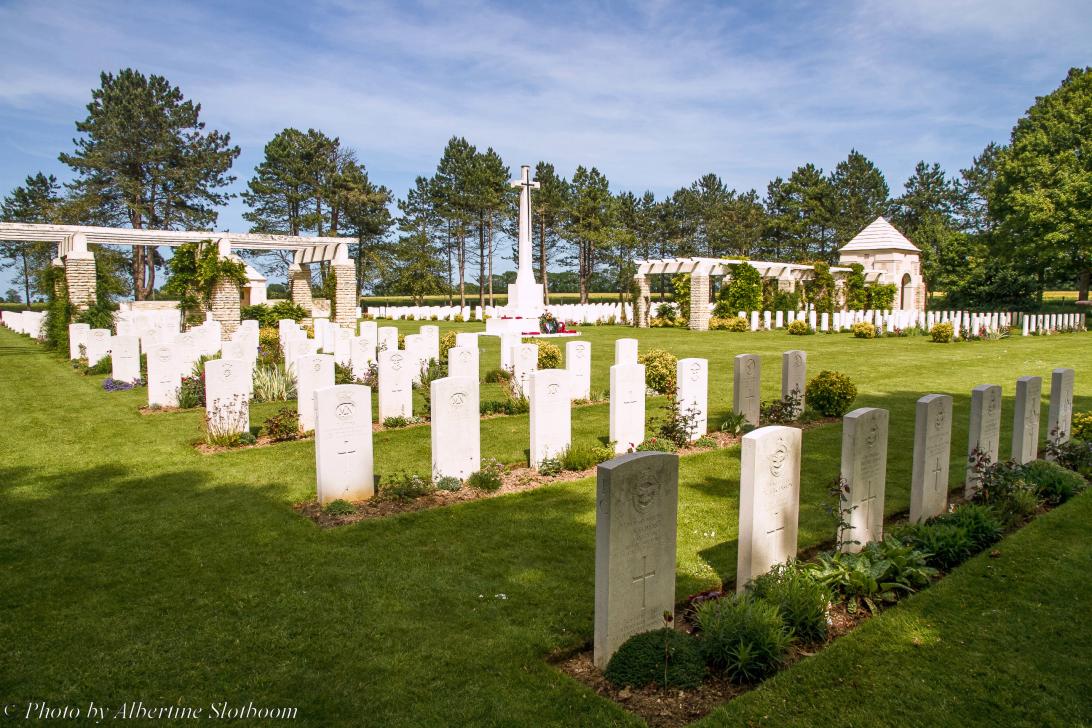
Commemorating D-Day in Normandy: Ryes War Cemetery at Bazenville. Bazenville is a small village about 8 km northeast of Bayeux and close to Arromanches-les-Bains. Ryes War Cemetery is situated in the Gold Beach sector, where the British 50th Division landed on D-Day. The first burials were on 8 June 1944. The cemetery contains 652 Commonwealth war graves, 1 Polish grave and 335 German graves, including the graves of 67 unknown soldiers.

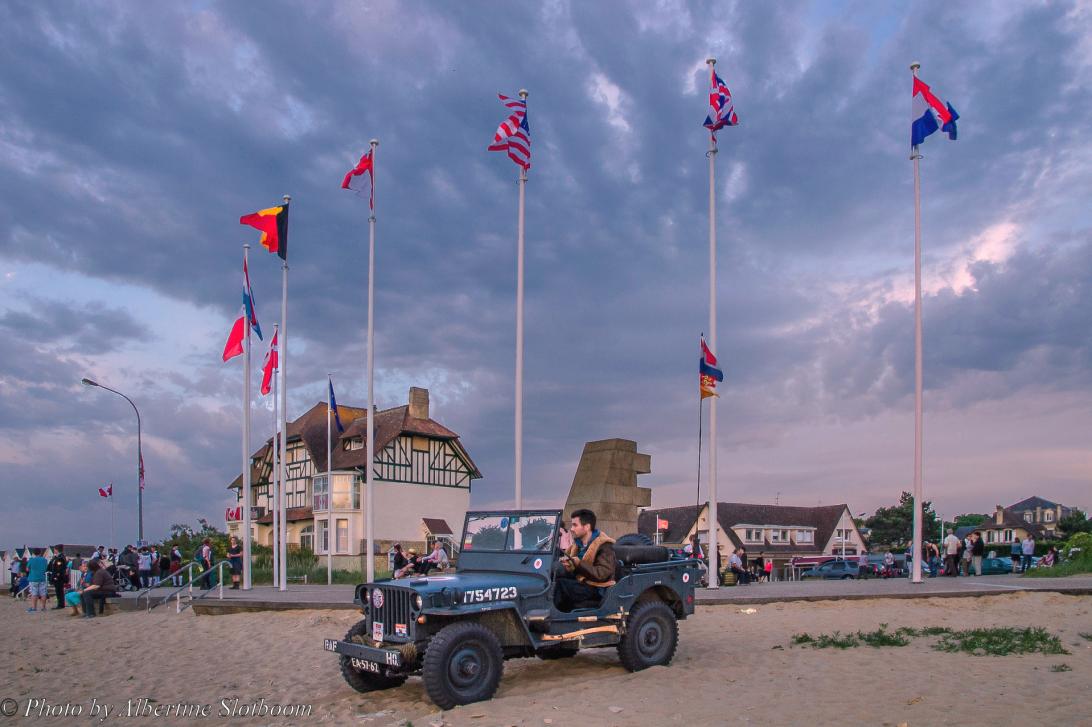
Commemorating D-Day in Normandy: Our own Ford Jeep in front of the Canada House in Bernières-sur-Mer. We were invited to honour the 70th anniversary of D-Day with our Jeep. The iconic Canada House is situated on Juno Beach, where the Queen's Own Rifles of Canada landed on D-Day, 6 June 1944. It is probably the first house liberated by Canadian troops who landed on Juno Beach. On D-Day, over 100 Canadian soldiers were killed or wounded in sight of this famous house.

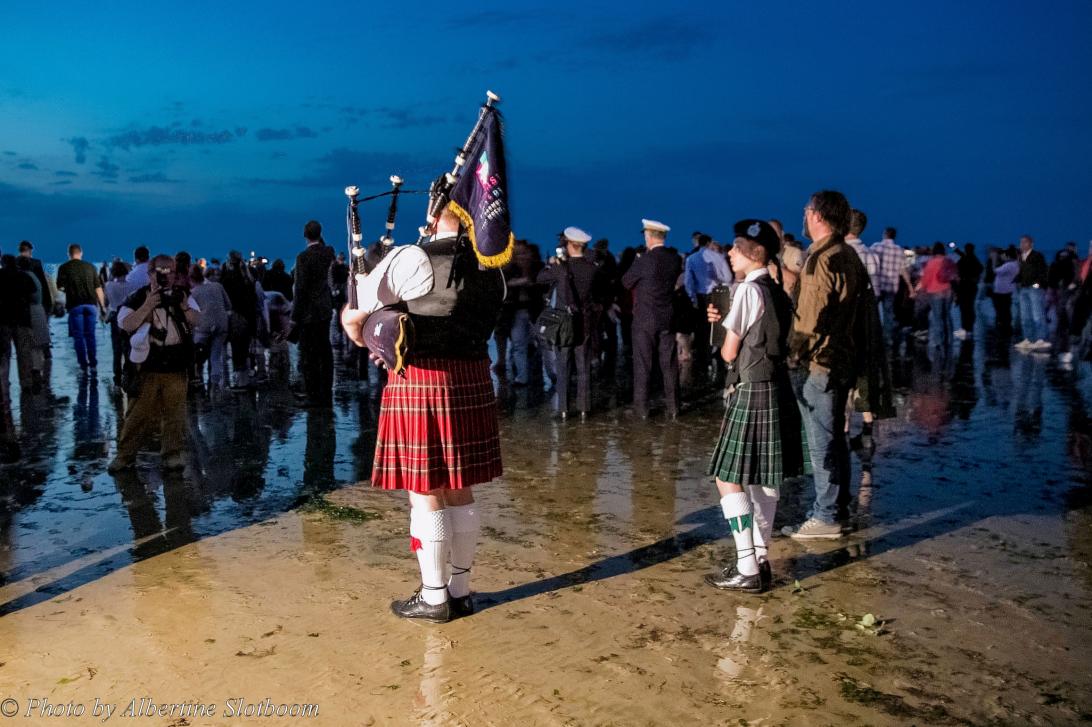
Commemorating D-Day in Normandy: A Scottish bagpiper on Juno Beach in front of the Canada House in Bernières-sur-Mer during the 70th anniversary of D-Day. When darkness fell, the bagpiper walked across the beach toward the sea followed by guests and bystanders. While he played his bagpipes, people scattered flowers onto the beach and into the sea as a tribute to the 340 Canadian soldiers who were killed here 70 years ago on D-Day, the invasion of Normandy during WWII.

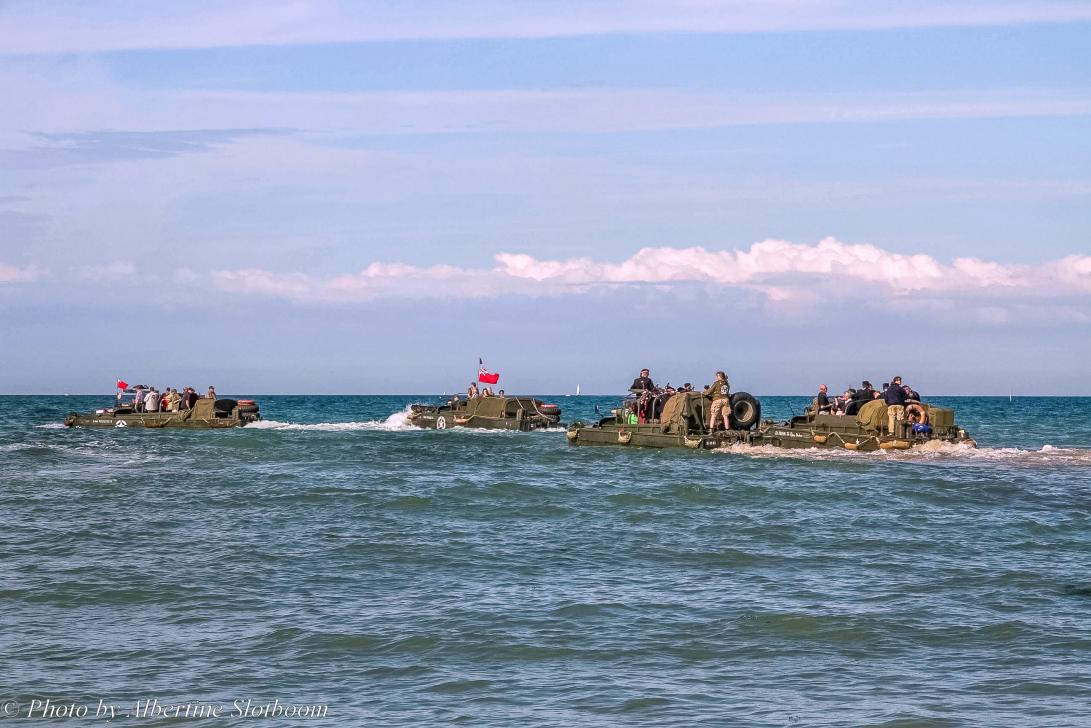
Commemorating D-Day in Normandy: During the 70th anniversary of D-Day, a DUKW (a large amphibious vehicle) floated on the waves in front of Juno Beach at Courseulles-sur-Mer. From the DUKW, memorial wreaths were tossed into the water to remember the 340 soldiers of the 3rd Canadian Infantry Division who were killed during the D-Day landings on Juno Beach on 6 June 1944. During WWII, Juno was the Allied codename for one of the five landing beaches along the coast of Normandy.

Commemorating D-Day in Normandy, the 70th anniversary: DUKWs floating on the sea within sight of Juno Beach at Courseulles-sur-Mer. A DUKW is a 2.5-ton, six-wheel-drive amphibious vehicle, produced during WWII for the transportation of goods and troops over land and water, and for approaching coasts and crossing beaches in amphibious warfare. DUKWs were first used during the invasion of Sicily in 1943 and also during the invasion of Normandy in 1944.

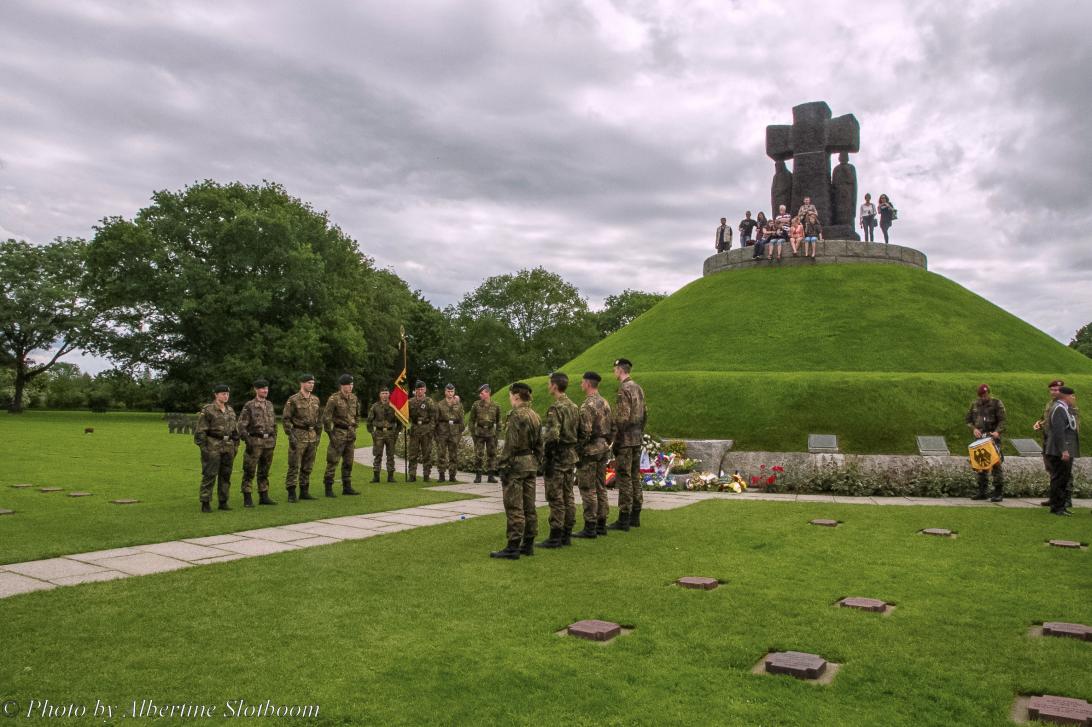
Commemorating D-Day in Normandy: La Cambe German Military Cemetery. On 6 June 2014, a memorial ceremony was held to mark the 70th anniversary of D-Day. La Cambe is the largest German military cemetery in Normandy. It holds the remains of 21,222 German soldiers who fell during the Battle of Normandy. This cemetery is known for its sombre atmosphere and dark stone crosses. The graves themselves are marked with simple, flat headstones, with two or three fallen soldiers buried in the same grave.

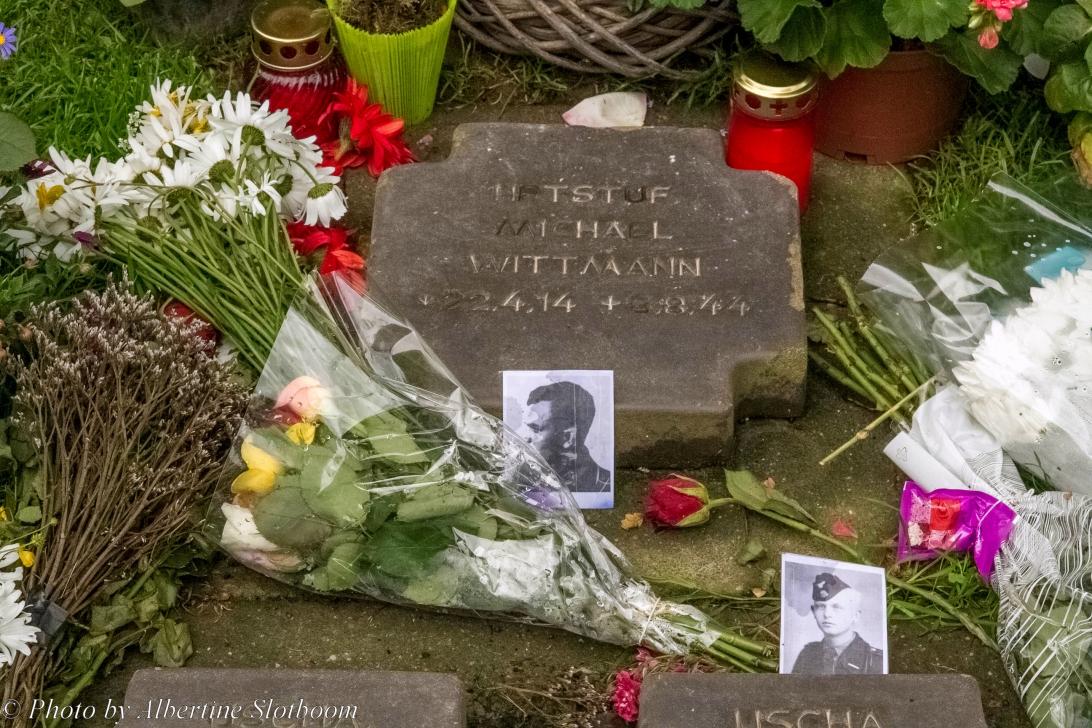
Commemorating D-Day in Normandy: Flowers on the grave of Michael Wittmann. Michael Wittmann was a German Waffen-SS officer and one of the most decorated tank commanders in WWII. He destroyed about 156 tanks, as well as 200 artillery pieces and 300 small vehicles. Killed in action on 8 August 1944, Wittmann and his crew were initially buried in an unmarked grave. Together with his crew, Wittmann was reinterred in a joint grave at La Cambe German Military Cemetery in 1983.

Commemorating D-Day in Normandy: The Normandy American Cemetery and Memorial at Omaha Beach in Colleville-sur-Mer is the largest American military cemetery in the region. It contains the graves of 9,387 American soldiers who fell during the Battle of Normandy between 6 June and 30 August 1944. The cemetery is located on a steep, high cliff overlooking the sea and Omaha Beach. Omaha was the bloodiest of all the landing beaches, where US divisions suffered more than 2,400 casualties on that single day, 6 June 1944.

Memorial tour along the Normandy landing beaches: During this road trip through Normandy in our own Jeep, we also visited Juno Beach. On D-Day, 6 June 1944, Juno Beach was the landing zone for the 3rd Canadian Infantry Division and the 2nd Armoured Brigade. Our Jeep landed on Juno Beach in 1944, just a few weeks after D-Day. Having served until the end of WWII, this RAF Jeep was left behind at Ypenburg Airfield in the Netherlands. We restored our Ford GPW Jeep im memory of, and as a tribute to, the veterans of WWII who fought for our freedom.